

Mini Biography |
| Birth Name | Anthony Dominick Benedetto |
| Name in Arabic | أنطوني دومينيك بينيديتو |
| Name in Hindi | एंथनी डोमिनिक बेनेडेटो |
| Nickname | Tony |
| Nationality | American |
| Profession | Singer, Painter |
| Religion | Catholic |
| Date of birth | August 3, 1926 |
| Age | 96 (at the time of death on July 21, 2023) |
| Ethnicity | Italian/American |
| Astrological Sign | Leo♌ |
| Place of birth | Astoria, Queens, New York, USA |
Who is Tony Bennett?
He was one of those singers who never left his fans disappointed, and some of his most prominent hits are I Left My Heart in San Francisco, The Best Is Yet to Come, and Rags to Riches. Till the last days, of his career, he received many awards and honors and achieved his best results in the Twenty-five years in the center of the pop j Not only in singing, but Bennett was also an outstanding painter his paintings and graphics were exhibited in galleries of the world.
At an older age, he remained as energetic as he used to be and he continued to sing and make albums, with today’s artists such as Lady Gaga. Unfortunately, he died on July 21, 2023, aged 96 and with him went one of the most cherished icons in the face of American music.
Height and Weight |
| Height In Centimeters: | 171 cm |
| In Meters: | 1.71 m |
| In Feet: | 5 feet 7 inches |
| Weight In KG: | 79 kg |
| Weight In Pounds: | 174 lbs |
Body Measurement and Appearance |
| Body measurement | Unknown |
| Body Type | Fit |
| Natural Hair Color | Grey |
| Natural Eye Color | Brown |
| Shoe Size | 9 (US) |
| Dress Size | Unknown |
| Tattoo Details | None |
| Sexual Orientation | Straight |
Family and Relationships |
Anthony Dominick Benedetto grew up in Astoria, Queens, in a family with roots in Calabria, southern Italy. His father, John Benedetto, had immigrated to the United States and worked as a grocer. His mother, Anna, was a seamstress. Tony had an older brother, John, and an older sister, Mary. Money was scarce during his childhood. His father’s poor health limited his ability to work, and he died when Tony was ten. Anna supported the family through her sewing work. Bennett later recalled the encouragement he received from relatives who admired his voice and drawings.
Music and art developed together. He listened to Bing Crosby and Louis Armstrong, drew caricatures at school, and performed before local audiences. As a child, he sang at the opening celebrations for the Triborough Bridge in 1936. Bennett attended Manhattan’s School of Industrial Art, where he studied music and painting. He left school at 16 to help support his family and took several jobs. Working as a singing waiter allowed him to earn money and practise before an audience. Long before a record contract, restaurants and amateur contests gave him experience with songs, timing and stage nerves.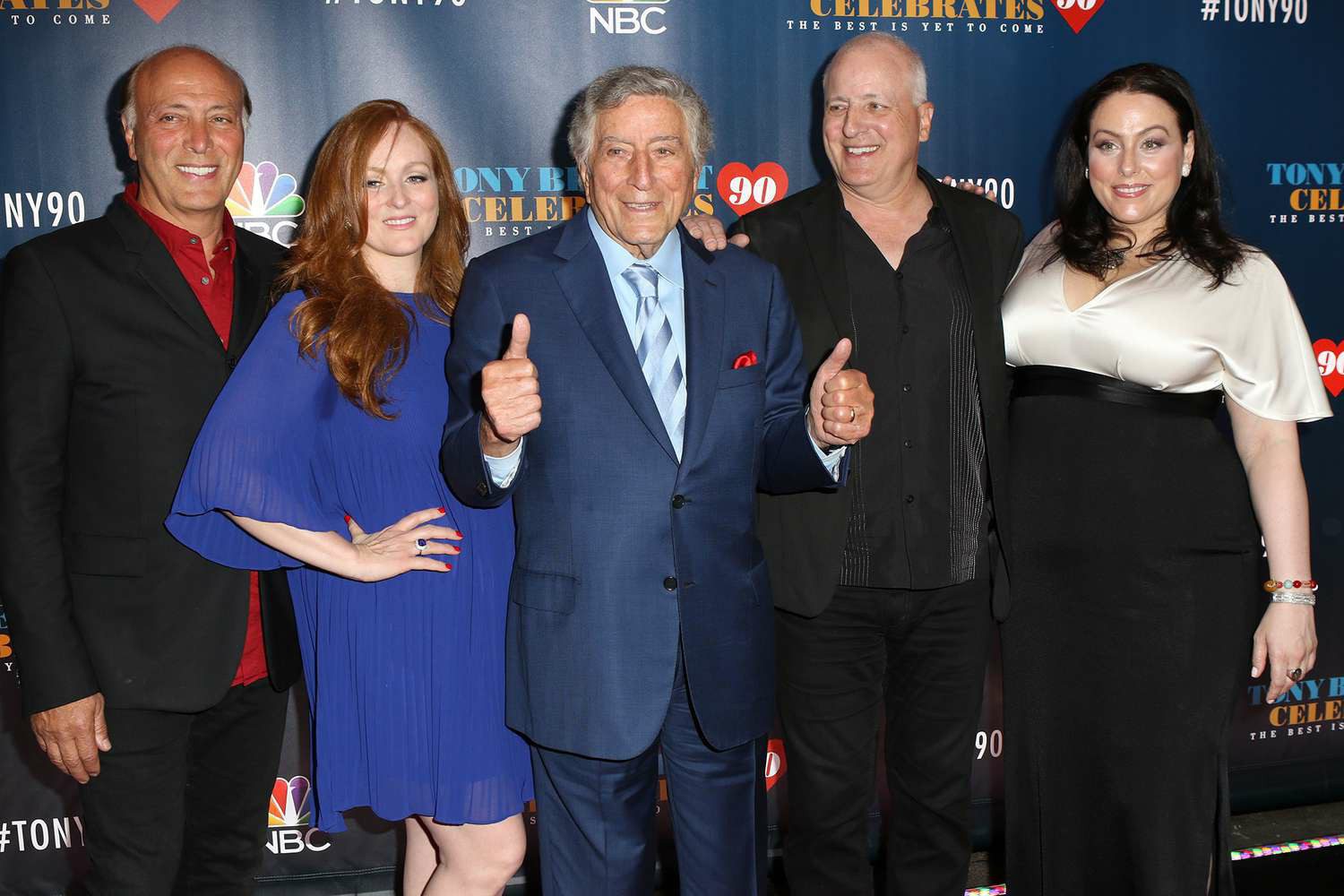
| Parents | Father: Giovanni “John” Benedetto Mother: Anna Maria Suraci |
| Siblings | Brother: John Benedetto Jr. Sister: Mary Benedetto |
| Marital Status | Married |
| Wife | Susan Crow (2007) Patricia Beech (1952-1971) Sandra Grant Bennett (1971-1983) |
| Children | Son: Danny Bennett Dae Bennett Daughter: Antonia Bennett Joanna Bennett |
| Girlfriend/Affairs | Susan Benedetto |


Tony Bennett has roots in Italy but his parents are John Benedetto and Anna Suraci Benedetto. The youthful Tony’s father was a grocer, who died in the family when Tony was 10 years old, leaving the family in blush. His mother used to work as a tailor to solve the financial problems in the family.
Siblings: He had a senior brother Josph John Jr and a senior sister Mary. Tony was raised in a rather small Italian-American family in Astoria, Queens, New York.
Marriages
Patricia Beech (1952–1971): Tony Bennett married Patricia Beech, an art student in 1952. They met for the first time after a dance at a nightclub setting proposed by him. They had two sons together: They had two sons together:
D’Andrea (Danny) Bennett: Despite being born in 1954, Danny played a big role in the comeback of Tony’s acting in the 1980s up to the 1990s when he started managing him.
Daegal (Dae) Bennett: Dae is known for being a music producer as well as an audio engineer and was born in 1955, and he is a multiple Grammy Awards winner. Tony and Patricia decide to part ways and get a divorce in 1971 after being in a marriage for almost two decades.
Sandra Grant (1971–1984): Tony later married actress Sandra Grant in the year 1971. The couple had two daughters: The couple had two daughters:
Joanna Bennett: Despite her birth in 1970, Joanna has maintained a low profile, especially concerning her personal life.
Antonia Bennett: Antonia was born in 1974 and she, therefore, also became a jazz singer who at times sang alongside her father. They were separated in 1979 and divorced in law in 1984.
Susan Crow (2007–2023): Tony Bennett has been married to Susan Crow since 2007. Susan, the plaintiff, was a former schoolteacher in New York City and asked to be 40 ‘something’ years younger than Finkelstein. They first got together at one of his concerts, she was a cute enthusiastic teenage Bennett fan then. Throughout the couple’s life, Susan and Tony stayed together till his death in 2023. The couple opened the Frank Sinatra School of the Arts in Queens, New York, and were major benefactors interested in the welfare of youths through arts and education.
World War II Changed His Outlook
Bennett entered the U.S. Army in 1944 and served as an infantryman in Europe during the final months of World War II. He experienced combat in France and Germany and participated in the liberation of prisoners at a Nazi concentration camp. Those experiences shaped his opposition to war. His later support for human rights came partly from what he had witnessed as a young soldier. He also encountered racial segregation within the American military. Bennett recalled punishment after he shared a meal with a Black friend during his service. That incident became part of his account of how he developed a lasting opposition to racial discrimination.
Music remained part of his life in uniform. He performed with military bands in Europe, then returned to the United States in 1946. The GI Bill helped him continue his education at the American Theatre Wing. His vocal studies gave him a practical approach that lasted throughout his career. Instead of copying another singer, he learned to study instrumentalists. A pianist’s unexpected phrase or a saxophonist’s use of breath could suggest a new way to deliver a lyric.
How Anthony Benedetto Became Tony Bennett
Bennett used the stage name Joe Bari before he became known as Tony Bennett. His opportunities grew in 1949 when Pearl Bailey invited him to perform with her in Greenwich Village. Bob Hope saw him during that engagement and offered him work. Hope also suggested a shorter professional name. Anthony Benedetto became Tony Bennett, a name that was easier to announce and place on a theatre marquee.
The change coincided with a move from small venues toward national exposure. Bennett signed with Columbia Records in 1950 and worked with producer Mitch Miller. His early recordings presented him as a romantic popular singer. Orchestral arrangements supported his voice, and his records reached listeners through radio, jukeboxes and live appearances. Jazz would become more prominent in his albums, but his first major commercial audience came through pop singles.
Tony Bennett Songs: From Early Number Ones to His Signature Standard
“Because of You” gave Bennett his first number-one American hit in 1951. His recording of Hank Williams’s “Cold, Cold Heart” followed that year and brought a country composition to a broad pop audience. “Rags to Riches” became another number-one single in 1953. Its bold arrangement offered a different setting from his earlier ballads.
Stranger in Paradise, associated with the musical Kismet, extended his audience beyond the United States. These records established his career before I Left My Heart in San Francisco appeared. They also explain the range within his catalogue: romantic ballads, theatre songs, country material, blues and jazz standards all had a place.
| Song | Release year | Place in his career |
|---|---|---|
| Because of You | 1951 | His first number-one American single |
| Cold, Cold Heart | 1951 | A chart-topping interpretation of Hank Williams’s song |
| Rags to Riches | 1953 | Another number-one hit and a lasting concert favourite |
| Stranger in Paradise | 1953 | A major recording from his early theatre-song repertoire |
| I Left My Heart in San Francisco | 1962 | His signature song and the recording behind his first two Grammys |
| I Wanna Be Around | 1963 | A prominent hit from his early 1960s catalogue |
| The Good Life | 1963 | A standard closely associated with his voice |
| Body and Soul, with Amy Winehouse | 2011 | A Grammy-winning duet from Duets II |
| The Lady Is a Tramp, with Lady Gaga | 2011 | The first released Bennett and Gaga duet |
I Left My Heart in San Francisco Was Not a Number-One Single
I Left My Heart in San Francisco became Bennett’s defining song after its 1962 release. Pianist and musical director Ralph Sharon helped bring it into his repertoire. The recording initially appeared as the B-side of “Once Upon a Time.” Its reception gave it a life far beyond that position on the record.
Although listeners often describe it as his biggest hit, it peaked at number 19 on the Billboard Hot 100. Earlier singles had reached number one. Its special place rests on its lasting association with Bennett, its recognition at the Grammys, and its role in his concerts. The song earned Record of the Year and Best Solo Vocal Performance, Male, at the 1963 Grammy ceremony. Bennett kept it in his performances for decades. He treated it as a song he still wanted to sing, rather than an obligation left over from an earlier career.
Jazz Albums Gave Him More Room to Experiment
Bennett’s singles made him a commercial recording artist, but his albums allowed him to explore a wider musical range. Cloud 7, released in 1955, moved toward a smaller jazz setting. The Beat of My Heart followed in 1957 with a strong emphasis on percussion and contributions from musicians such as Art Blakey, Jo Jones and Chico Hamilton. His work with Count Basie placed him alongside an orchestra with its own precise sense of swing. Bennett had to fit his voice into a conversation with the band, rather than simply sing over an accompaniment.
He also developed a productive relationship with Ralph Sharon, whose piano work and musical direction supported him across a substantial part of his career. Bennett’s approach depended on clear words, rhythmic freedom and respect for the composition. He could stretch a phrase without losing the song’s shape. A quiet passage could carry as much weight as a sustained high note. His 1962 Carnegie Hall concert documented the scale of his repertoire and his command of a live audience. The programme brought together popular hits and standards, with experienced jazz musicians behind him.
The Difficult 1970s and His Recordings With Bill Evans
Changes in popular music put pressure on Bennett’s career during the late 1960s. Columbia wanted contemporary material that could compete in a market increasingly shaped by rock. Bennett resisted some of those choices. He did record current songs, but the results did not create a lasting new direction. He left Columbia in 1972 and later established his own label, Improv. The business struggled, yet this period produced two important collaborations with pianist Bill Evans: The Tony Bennett/Bill Evans Album in 1975 and Together Again in 1976.
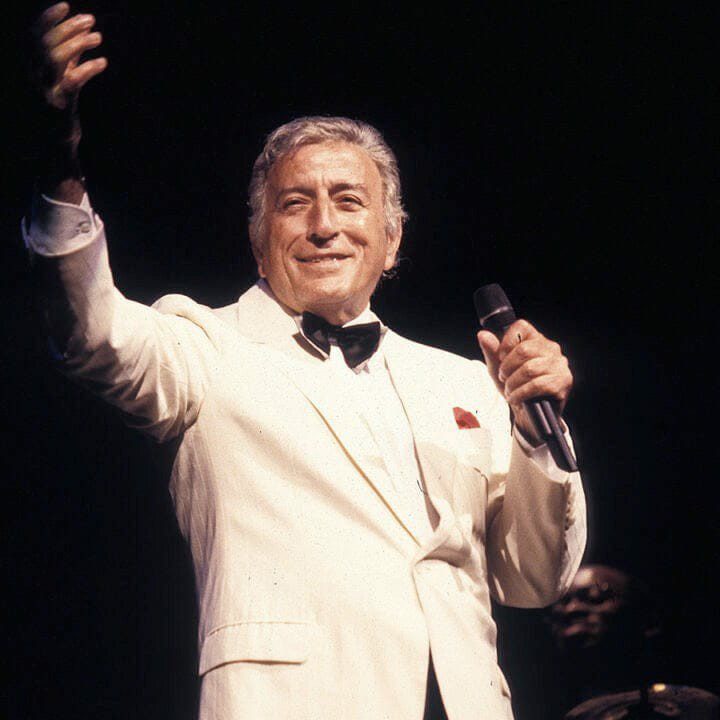
The stripped-back format exposed every musical decision. With only Evans’s piano beside him, Bennett had no large orchestra to supply momentum or conceal an uncertain phrase. Their performances relied on close attention and space. Commercial problems continued. Improv closed, his recording opportunities narrowed, and financial pressures grew. Substance use also affected his life. After a near-fatal cocaine overdose in 1979, he sought help from his sons. His eldest son, Danny, became his manager. Their partnership would change the direction of the next four decades.
Danny Bennett, Columbia and the MTV Comeback
Danny Bennett helped his father address expenses, rebuild his bookings and reach audiences beyond the nightclub circuit. The strategy preserved the music. Bennett kept his suits, jazz musicians and standards. Danny’s task was to place that act before listeners who had not grown up with his records. Bennett returned to Columbia in 1986 with The Art of Excellence. The album marked a renewed recording relationship and a more stable professional period.
Television helped introduce him to younger viewers. Appearances on late-night programmes, The Simpsons and MTV placed him in settings far removed from his early 1950s audience. His tribute albums also found an audience. Perfectly Frank honoured Frank Sinatra in 1992, and Steppin’ Out drew on Fred Astaire’s repertoire in 1993. Each won a Grammy.
The breakthrough of this second career phase came with MTV Unplugged in 1994. Elvis Costello and k.d. lang joined him, but the performance remained recognisably Bennett’s. The resulting album won Album of the Year and Best Traditional Pop Vocal Performance at the 1995 Grammys. A singer whose first hits predated rock and roll had reached a central platform of 1990s youth television.
Duets, Amy Winehouse and His First Number-One Album
Collaboration became central to Bennett’s later recording career. A Wonderful World, his album with k.d. lang, appeared in 2002 and drew on songs associated with Louis Armstrong. Duets: An American Classic followed in 2006, the year of his 80th birthday. Its guests included Paul McCartney, Barbra Streisand, Elton John, and Stevie Wonder.
The project placed different voices inside Bennett’s musical setting. Familiar songs gave each partnership a common starting point, and the contrast between singers became part of the appeal. Duets II arrived in 2011. At 85, Bennett earned his first number-one album on the Billboard 200 and became the oldest living artist to top that chart at the time.
His guests included Aretha Franklin, Willie Nelson, Carrie Underwood, and Queen Latifah, who joined him on Who Can I Turn To (When Nobody Needs Me). Amy Winehouse recorded Body and Soul with him in March 2011, a few months before her death. Their recording won Best Pop Duo/Group Performance at the 2012 Grammys. Bennett admired her understanding of jazz phrasing, and the duet preserved a meeting between two singers from very different generations.
Tony Bennett and Lady Gaga: A Musical Partnership and Close Friendship
Tony Bennett and Lady Gaga first released music together on Duets II. Their version of “The Lady Is a Tramp” paired his relaxed authority with her energetic delivery. The recording led to a longer partnership. Their first full album together, Cheek to Cheek, appeared in 2014. Its repertoire included jazz standards and songs from the Great American Songbook. Gaga approached the material as a jazz vocalist, and Bennett worked with her as a fellow interpreter. The album reached number one on the Billboard 200, extending his age record to 88.
Cheek to Cheek won Best Traditional Pop Vocal Album at the 2015 Grammys. The pair also performed together in North America and Europe. Their relationship extended beyond studio work. Gaga described Bennett as a close friend who helped her maintain confidence in her voice and artistic choices. Bennett spoke warmly about her ability to connect with an audience. Their second album, Love for Sale, focused on Cole Porter’s songs. Released in 2021, it became Bennett’s final studio album and won Best Traditional Pop Vocal Album in 2022. Other late-career projects showed that his interests remained broad. He recorded The Silver Lining: The Songs of Jerome Kern with pianist Bill Charlap in 2015, and Love Is Here to Stay with Diana Krall in 2018.
Anthony Benedetto the Painter
Bennett maintained a serious interest in visual art throughout his adult life. He usually signed his paintings with his family name, Benedetto. He painted landscapes, portraits, and scenes from places he visited. Touring gave him new subjects, and art provided work he could do away from the stage. His paintings entered institutional collections, including the Smithsonian. His subjects included fellow musicians, which connected his two artistic lives without making one dependent on the other.
Books also documented that work. Tony Bennett: What My Heart Has Seen appeared in 1996, followed by Tony Bennett in the Studio: A Life of Art & Music in 2007. His autobiography, The Good Life, was published in 1998. Later books, including Life Is a Gift and Just Getting Started, returned to his experiences in music, art, and public life.
Civil Rights and the School He Helped Build
Bennett supported the American civil rights movement and joined the Selma-to-Montgomery effort in 1965. He also performed for marchers alongside other entertainers. His commitment reflected experiences that reached back to military service and childhood. He opposed racial discrimination and used his position as a performer to support causes beyond the recording industry. Arts education became another long-term concern. Bennett and Susan founded Exploring the Arts in 1999 to support arts programmes in public high schools.
They helped establish the Frank Sinatra School of the Arts in Astoria, which opened in 2001. The public school offered young artists a place to study their chosen discipline alongside academic subjects. Its location mattered. Bennett had left school to help support his family, and the school brought formal arts opportunities to the neighbourhood where his own interests had developed.
Grammy Awards and National Honours
Bennett received 19 competitive Grammy Awards, plus a separate Lifetime Achievement Award. Reports that describe him as a 20-time Grammy recipient generally include that honorary award in the total. The Recording Academy’s award record lists 19 wins and 41 nominations. His competitive victories extend from I Left My Heart in San Francisco to Love for Sale.
His honours also included two Primetime Emmy Awards, a Kennedy Center Honor in 2005 and recognition as an NEA Jazz Master in 2006. The Library of Congress added his recording of I Left My Heart in San Francisco to the National Recording Registry in 2017. That recognition preserved the recording’s place in American cultural history beyond its original chart performance.
Alzheimer’s Diagnosis and His Final Public Concerts
Bennett received an Alzheimer’s diagnosis in 2016. His family disclosed it in February 2021 after he had continued to record and perform for several years. The illness affected his memory, but familiar songs remained accessible to him. His family and collaborators described a clear difference between the difficulties of daily conversation and his ability to perform music he knew. That distinction should not obscure the seriousness of his condition. Susan provided care, and his professional schedule eventually became too demanding for his physical health.
His final public concerts took place at Radio City Music Hall on August 3 and 5, 2021. The first fell on his 95th birthday. Lady Gaga joined him for the performances. His retirement from concerts followed that month. Material from those shows appeared in One Last Time: An Evening with Tony Bennett and Lady Gaga. Bennett died in New York City on July 21, 2023, thirteen days before his 97th birthday. His representative announced his death without disclosing a specific medical cause. His Alzheimer’s diagnosis formed part of his final years, but it should not be presented as a separately established immediate cause of death.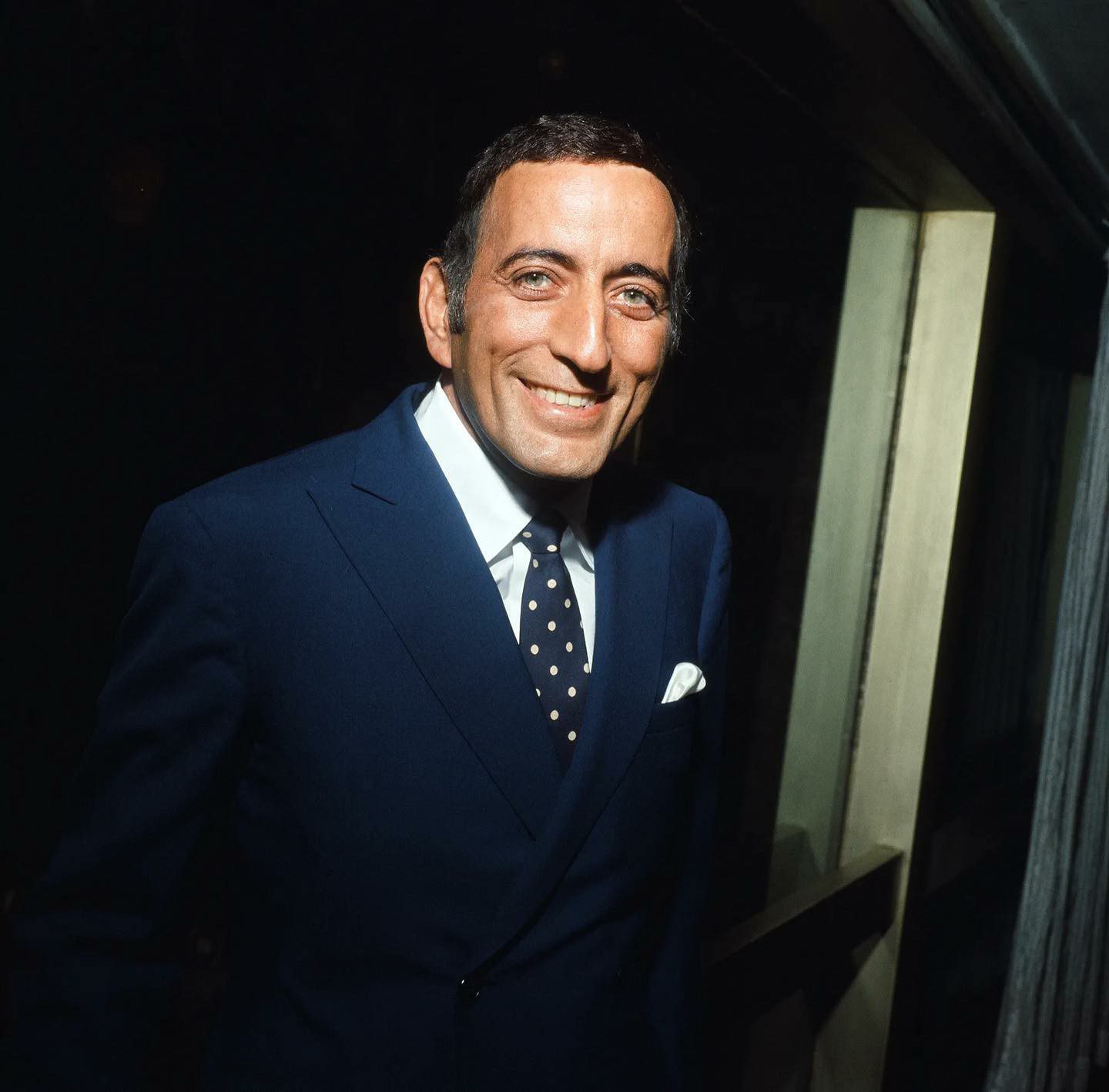
Career and Net Worth |
| Net Worth: | $200 million |
| Net Worth in 2023 | $200 million |
| Net Worth in 2022 | $200 million |
| Income Source | Music Sales and Royalties, Concert Revenue, Art Sales, Real Estate Investments |
| Debut: Film; | Tony Bennett made his film debut in The Oscar (1966). |
Military Service: As for the information about his military experience, Tony Bennett was enlisted in the U. S. Army during the Second World War and fought in Europe. Wing later went to the American Theatre Wing after the war through the GI Bill of Rights.
Discovery and Early Success: Bennett beginning in 1949 was discovered by Pearl Bailey who made it possible for him to land his first opportunity. His first major success was the song “Because of You” in 1951, which reached number one and sold more than one million records. This was succeeded by other such productions like “Rags to Riches and”, ‘Stranger in Paradise”.
Social Media Profiles
| @TonyBennett | |
| Youtube | @TonyBennett |
| @Tonybennett | |
| Official Site | TonyBennett.com |
| Wikipedia | @TonyBennett |
| Home Page | Irishpublic.com |
FAQs
What is Tony Bennett’s cause of death?
Tony Bennett’s representative did not disclose a specific cause of death when announcing that he died on July 21, 2023. He had lived with Alzheimer’s disease since a 2016 diagnosis, which his family revealed in 2021. That medical history is established, but it does not identify the immediate cause of his death. He was 96 and died in New York City.
What is Lady Gaga’s relationship with Tony Bennett?
Lady Gaga was Tony Bennett’s close friend and musical collaborator. Their partnership began with The Lady Is a Tramp on his 2011 album Duets II, followed by the joint albums Cheek to Cheek and Love for Sale. Each album won a Grammy. Gaga also performed beside him at his final public concerts and described their friendship as deeply personal.
What was Tony Bennett’s biggest hit?
I Left My Heart in San Francisco was Tony Bennett’s signature song and his best-known recording. Released in 1962, it earned his first two Grammy Awards and remained central to his concerts. Its Billboard Hot 100 peak was number 19. Earlier songs, including Because of You, Cold, Cold Heart, and Rags to Riches, achieved higher American singles-chart positions.
What were Tony Bennett’s last words?
Tony Bennett’s son Danny said his father’s last words to him were Thank you. Susan Benedetto separately recalled that her husband’s final words to her expressed his love. Their accounts describe different personal exchanges, rather than a single established final sentence. Susan also identified “Because of You” as the last song he sang before his death, in their August 2023 Today interview.
What did Lady Gaga say about Tony Bennett’s death?
Lady Gaga wrote, I will miss my friend forever, in her tribute after Tony Bennett’s death. She recalled his musical guidance, optimism and gratitude, and described the pain of his memory loss. She also stressed the depth of their friendship despite their different ages. Her tribute to Bennett urged readers to care for older relatives and friends as their needs changed.

