
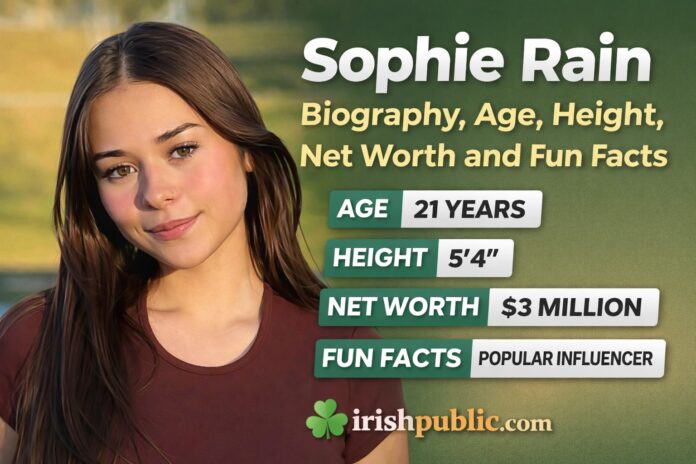
| Basic Info→ Sophie Rain: Influencer | Age: 21 years old | Height: 5’4″ (163 cm) |
Sophie Rain is a young American influencer and model. She was born on September 22, 2004. She is 21 years old and comes from Miami, Florida. Her zodiac sign is Virgo. She follows Christianity. Her height is 5 feet 4 inches, which equals 163 cm. She has a simple and balanced lifestyle that matches her public image.
People know her due to her online presence and her success on subscription platforms. Her early fame came through viral posts and bold content. Her name gained attention across many social platforms.
| Personal Profile | |
| Real Name | Sophie Rain |
| Profession | Social media influencer, model, OnlyFans content creator |
| Famous for | Earning over $50 million in net profit from OnlyFans in her first 1-2 years; co-founding Bop House collective |
| Date of Birth | September 22, 2004 |
| Age | 21 Years |
| Birthplace | Miami, Florida, United States |
| Zodiac sign | Virgo |
| Ethnicity | Mixed |
| Nationality | American |
| Religion | Christianity |
| Gander | Female |
| Educational Qualifications | High school graduate |
| Hobbies | Dancing, traveling, basketball, swimming, and cats |
| Social Media Account | TikTok X |
Sophie Rain Biography
Sophie spent her early years in Miami. She grew up in a normal household. Her father runs a restaurant, and her mother stays private. Her family prefers a low public profile.
She has siblings, including two brothers and a sister named Sierra Rain. Her sister also works as a social media influencer. This shared interest helped shape Sophie’s path.
Her school life remained simple. She completed high school but did not follow a traditional college route. She chose to focus on online work and personal growth. This decision changed her future.
She spent her early years in Miami. Her father runs a restaurant, and her mother stays private. Her family prefers a low public profile.
She has siblings, including two brothers and a sister named Sierra Rain. Her sister also works as a social media influencer. This shared interest helped shape Sophie’s path.
Her school life remained simple. She completed high school but did not follow a traditional college route. She chose to focus on online work and personal growth. This decision changed her future.
Physical Appearance | |
| Height | In centimeters: 163 cm In meters: 1.63 m In Feet: 5’4″ |
| Weight | In Kilograms: 55 kg In Pounds: 121 lbs |
| Body Measurements | 32-28-34 inches |
| Eye Colour | Hazel brown |
| Hair Colour | Dark brown |
Sophie has a slim and balanced body. Her height is 163 cm, which equals 1.63 meters or 5 feet 4 inches. And her weight is around 55 kg or 121 pounds.
Her body measurements are 32-28-34 inches. She has hazel brown eyes that stand out in her photos. Her hair is dark brown and suits her natural look. Her appearance plays a role in her success as a model. She keeps a clean and confident image. Her style remains modern but simple.
Family | |
| Parents | Father: Restaurant owner (name not shared) Mother: Name not shared |
| Siblings | Brother: 2 Sister: Sierra Rain (social media influencer) |
She comes from a supportive family. Her father runs a restaurant business. Her mother stays away from public life. This choice helps keep family privacy.
She has two brothers and one sister. Her sister Sierra Rain also works in the influencer space. This connection helped both grow their reach.
Her personal life remains private. She is not married and has no children. She has said she is single. And she prefers to keep her dating life away from public talk.
Relationships And More | |
| Marital Status | Unmarried |
| Husband/Spouse | None |
| Children | None |
| Affairs/Boyfriends | She has emphasized being single |
She keeps her relationship status clear. She has said she is single. Her public image stays strong and confident. She speaks openly about her career choices. She does not shy away from criticism.
This bold approach helped her gain both support and attention. Some people admire her success. Others question her choices. She stays focused on her goals.
Career
Sophie Rain began her online career in 2023. She joined OnlyFans in May of that year. Her rise came fast after that step. She gained attention due to her content style and bold presence.
Her early success shocked many people. Reports state she earned over $50 million in net profit in her first one to two years. This level of growth placed her among the top creators.
She also co-founded the Bop House collective. This group helped creators grow together. It gave her more reach and influence in the online space.
Social Media Growth and Influence
Sophie built her audience on platforms like Instagram and TikTok. Her style feels natural and direct. Her follower count grew due to viral clips and strong engagement. She connects well with her audience.
Fans enjoy her honest and bold personality. She also works with brands through sponsorship deals. These partnerships add to her income. Her online presence continues to expand each year.
Net Worth
Sophie Rain earns from multiple sources. OnlyFans stands as her main income stream. Reports show yearly earnings around $83 million from that platform.
She also earns from Instagram and TikTok promotions. Brands pay for sponsored posts and campaigns. These deals bring steady income. Her estimated net worth is around $3 million. This figure may grow as her career expands. Her success shows the power of digital platforms today.
| Career | |
| Income Sources | OnlyFans (primary; $83M reported yearly earnings), TikTok/Instagram sponsorships |
| Net Worth | $3 million |
| Debut | OnlyFans May 2023 |
| Awards | |
Lifestyle and Daily Routine
Sophie Rain lives a modern lifestyle. She enjoys travel and new experiences. Her social media often shows parts of her daily life. She spends time on content creation and brand work. She also focuses on fitness and self-care.
Her routine stays balanced between work and rest. Her life reflects freedom and control. She built her career on her own terms. Many young creators look up to her path.
Know Some Facts About
- Sophie Rain reached multi-million earnings within two years of her debut. This growth is rare in the digital world.
- She prefers to keep family details private. This choice helps protect her personal life. Her sister also works as an influencer.
- She enjoys simple hobbies like dancing and sports. She also loves cats. These small details make her relatable to fans.
- Her career started in 2023, yet she built global fame fast. Her story shows how fast online success can grow today.
