
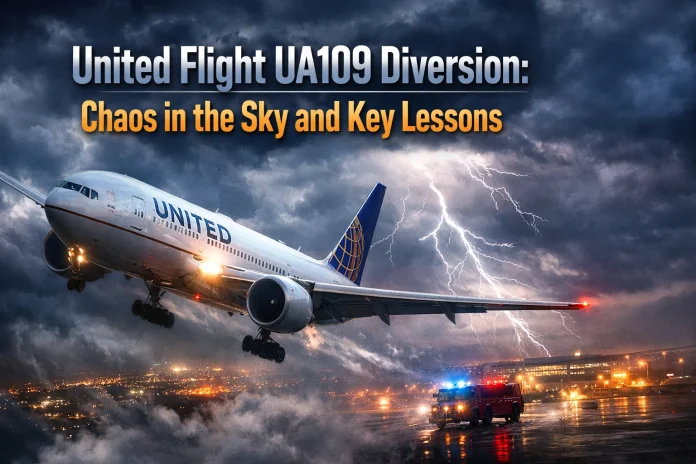
United Flight UA109 made headlines after it diverted during a routine trip from Newark to San Francisco. Passengers expected a calm cross-country flight. Instead, they faced sudden turbulence, sharp altitude changes, and an emergency landing in Chicago. Many onboard felt fear as the cabin shook in the dark sky.
This event raised questions about flight safety, airline response, and passenger rights. Diversions sound rare, yet they do happen. Federal data shows that about 1 in 1,000 flights divert each year. Most end without serious harm. Still, each case leaves a strong impact on travelers who live through it.
What Triggered the United Flight UA109 Diversion?
United 109 left Newark at 8:45 PM. The aircraft climbed to 35,000 feet and headed west over the Midwest. At around 10:20 PM, the crew received a mid-flight alert. The plane then dropped several thousand feet within minutes. Cabin lights flickered. Passengers gripped their seats.
Pilots reported severe windshear in the flight path. Weather radar showed gusts above 60 miles per hour. Sensors also flagged a minor engine warning. The alert did not signal engine failure, yet it required review. The captain chose to divert to Chicago for safety checks.
The plane landed safely about two hours after departure. Emergency teams stood ready on the runway. No major injuries occurred, though one passenger suffered a minor bruise after losing balance during turbulence. A pilot log entry later noted an “immediate return for checks.” Aviation expert John Hale said the captain’s quick call likely reduced risk.
Timeline of the Incident
The diversion unfolded in clear stages. Each moment shows how fast events move in the sky.
| Time (Local) | Event |
|---|---|
| 8:45 PM | UA109 departs Newark |
| 10:20 PM | Severe turbulence hits |
| 10:25 PM | Engine sensor alert appears |
| 10:30 PM | The captain declares a diversion. |
| 11:15 PM | Safe landing in Chicago |
The quick descent alarmed passengers. Crew members secured the cabin and asked everyone to remain seated. Pilots spoke through the intercom to explain the shift. That calm tone helped reduce panic.
Ground control cleared a direct route to Chicago. Air traffic teams adjusted nearby flights to give UA109 space. The safe landing showed strong coordination between the cockpit and the control tower.
Severe Turbulence and Mechanical Alert
Weather played a large role in this diversion. Strong windshear can cause sudden altitude drops. Aircraft design can handle such stress, yet the ride can feel extreme inside the cabin. Seat belts matter most during these moments.
The engine warning added another layer of concern. Modern planes rely on advanced sensors. Even a small glitch prompts a review. Pilots do not wait for failure. They choose caution. Federal rules support that decision. Safety stands above schedule. Airlines accept delay costs rather than risk a larger issue. In this case, the system worked as designed.
Pilot and Crew Response
Flight crews train for events like this. Simulators prepare them for turbulence, alerts, and emergency routes. The UA109 captain followed FAA diversion protocol. That rule requires the nearest safe airport when a mechanical alert appears.
Cabin crew moved fast to secure loose items. They checked on passengers after landing. Clear instructions kept order. Most travelers stayed calm once they heard updates.
John Hale, an aviation safety analyst, later said, “The captain’s call likely prevented more serious trouble.” His comment reflects the industry view that early diversion protects lives.
Passenger Stories from United Flight UA109 Diversion
The cabin shook hard during the drop. Some people screamed. A mother later shared that she held her children close and prayed for calm skies. Another traveler said the sudden shift felt like “a roller coaster without warning.”
One passenger posted on social media under the name @SkyHighJane. She wrote, “It felt like the end of the world.” That post gained attention online. Fear spreads fast in shared spaces.
After landing, stress shifted to frustration. Many faced a six-hour delay in Chicago. Vouchers covered meals. Hotel rooms ran short due to the weather in the area. Some travelers chose to wait overnight at the gate.
Ground Handling and Delays
United Airlines moved the aircraft to a maintenance hangar for inspection. Technicians worked overnight. Engineers checked the engine alert system and verified structural safety. The plane cleared inspection the next day.
Passengers rebooked onto other flights. Some received refunds. Others accepted travel credits. The airline offered seat upgrades to a few affected travelers. Airports often face crowd pressure during diversions. Extra aircraft create gate shortages. Chicago staff worked to manage traffic and keep information flowing.
United Airlines’ Official Response
United Airlines issued a statement soon after the event. The company stressed its safety policy. The CEO said, “Safety comes first, always.” That message appeared in a February 2026 press release.
The airline confirmed that about 200 passengers were onboard. No serious injuries occurred. Maintenance teams found no lasting engine damage. The weather caused most of the stress events.
United also announced plans to expand turbulence detection tools. New systems use satellite data to predict rough air sooner. The airline said it will install these tools across more aircraft in 2026.
Safety Trends in Flight Diversions
Diversions remain rare in commercial aviation. Data from the National Transportation Safety Board shows that about 5 percent of U.S. diversions relate to weather. Mechanical alerts make up a smaller share.
United Airlines reports a diversion rate of about 0.8 per 10,000 flights. That figure sits near the industry average. Winter months show a 15 percent increase due to storms and wind patterns. Recent cases offer a comparison. A 2023 American Airlines flight was diverted after smoke appeared in the cabin. No injuries occurred. Another event involved a Delta flight that diverted to Los Angeles, which shows how weather and system alerts often lead to precautionary landings. Each case ended safely.
How Diversions Compare Across Airlines
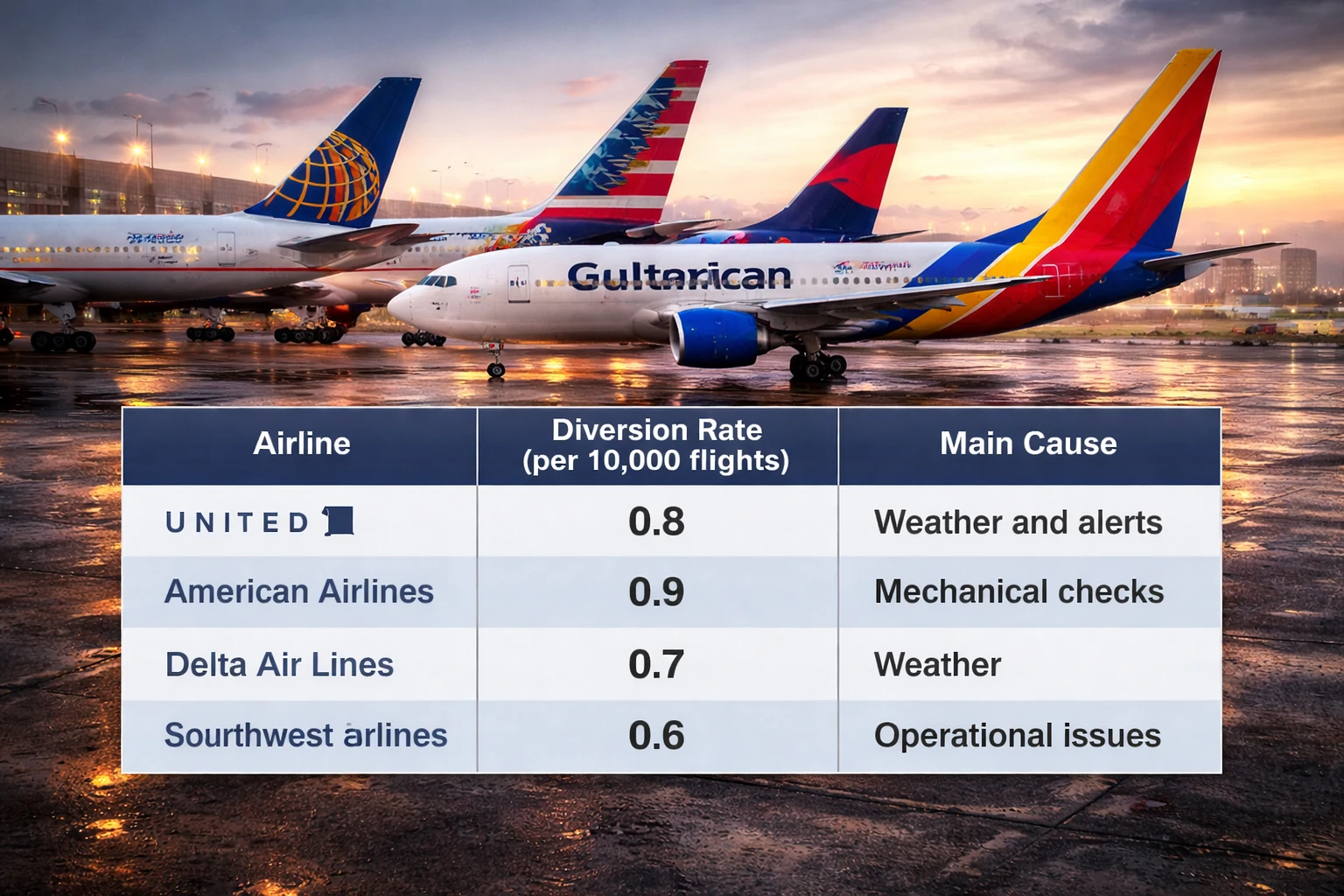
The table below shows sample diversion data across major carriers.
| Airline | Diversion Rate (per 10,000 flights) | Main Cause |
|---|---|---|
| United Airlines | 0.8 | Weather and alerts |
| American Airlines | 0.9 | Mechanical checks |
| Delta Air Lines | 0.7 | Weather |
| Southwest Airlines | 0.6 | Operational issues |
These numbers highlight strong overall safety. Most airlines share similar rates. Weather remains the leading cause across carriers.
Tips for Travelers Before and During a Diversion
Preparation reduces stress. Travelers can take simple steps before any flight.
- Pack essential medicine in carry-on bags.
- Download airline apps for real-time alerts.
- Check the weather along the route before departure.
During turbulence, stay seated and buckle tight. Follow crew instructions. Deep breathing can calm nerves. After diversion, speak with airline staff about rebooking or compensation. Keep receipts if you pay for meals or hotels. Clear records support refund claims.
Related Diversion Cases and Public Interest
Other recent news stories show how flight events gain attention. Some flights divert due to lost items such as laptops in cargo holds. One case involved a return to Washington after a device fell into a storage area.
The media often covers stories about flight attendants or delays linked to staffing issues. Terms such as “United flight delayed due to flight attendants” or “United flight attendants fighting” appear in searches. Most of those events differ from weather-driven diversions like UA109.
Interest also rises when events recall past airline controversies. The public still remembers the incident involving Dr. David Dao in 2017. That case centered on overbooking and passenger removal, not weather or mechanical alerts. Each event has its own facts.
What Passengers Should Learn from UA109
The UA109 diversion shows how safety systems protect travelers. Pilots rely on training and data. Airlines accept delay costs to reduce risk. Crew communication matters during crisis moments.
Passengers also play a role. Seat belts reduce injury during turbulence. Calm behavior helps others remain steady. Preparation supports comfort when plans change.
Air travel remains one of the safest forms of transport. Over 99.999 percent of flights reach their destination without diversion. Rare events still draw attention because fear feels strong at 35,000 feet.
Conclusion
United Flight UA109 faced a tense night in the sky. Severe wind and a system alert forced a quick change of route. Pilots chose safety over schedule. Crew members kept order in the cabin. The plane landed without major harm.
Diversions can feel chaotic, yet they show the strength of aviation systems. Data proves that most flights remain smooth and secure. Travelers can reduce stress through simple steps and awareness. Share your travel story, stay informed, and plan smart for your next trip.
FAQs
What is the United 45-minute rule?
United follows federal tarmac delay rules. Domestic flights cannot remain on the ground more than three hours without a passenger option to leave.
Does United provide compensation for diversions?
Compensation depends on the cause. Weather events usually lead to meal vouchers or rebooking, not cash payments.
Can you look up why a flight was diverted?
Yes. Flight tracking sites and airline customer service can confirm the reason.
What happened to Dr. Dao on United Airlines?
Dr. David Dao was removed from a flight in 2017 after an overbooking dispute. The airline later settled the case.
What is the 3-1-1 rule on United Airlines?
The 3-1-1 rule refers to TSA liquid limits. Each passenger may carry liquids in 3.4-ounce containers within one clear quart bag.
How long can a flight be delayed before compensation from United?
United offers support based on cause. Mechanical delays may qualify for vouchers. Weather delays rarely include direct payment.

