
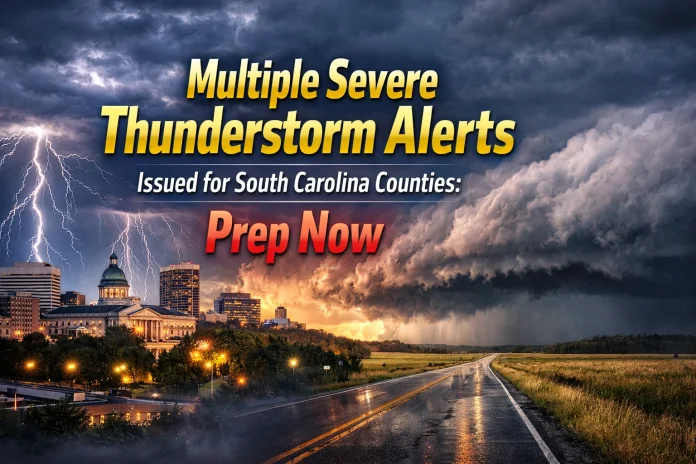
Sirens sound across neighborhoods. Strong winds shake homes. Emergency alerts flash on phones across South Carolina. Many residents woke up or stepped outside to dark skies and fast-moving clouds. The National Weather Service issued multiple severe thunderstorm alerts across several counties. The message was clear. Dangerous weather could hit at any time. Recent warnings cover more than ten counties across the state in February 2026. Weather experts expect heavy rain, strong wind gusts, hail, and possible tornado activity in some areas.
What the Alerts Mean
Severe thunderstorm alerts come from the National Weather Service. A watch means conditions support strong storm development. A warning means severe weather already exists or will hit soon. A warning calls for immediate action. People should move indoors and stay away from windows when a warning appears.
These alerts often trigger when wind speeds may reach 60 miles per hour or higher. Large hail can also form under these storm systems. Some warnings mention tornado risk if radar shows rotation in the storm. Meteorologists monitor temperature shifts, wind patterns, and moisture levels before they issue alerts.
Dr. Jane Lee from the South Carolina Weather Center explained that fast-moving fronts often spark these winter storms. Cold air pushes into warm Gulf air. The clash builds strong storm cells. February storms do not happen every year, yet they can grow intense when conditions line up.
Timeline of the Current Warnings
Weather officials issued watches earlier in the day. Many counties remain under watches until 8 PM Eastern Time. Several warnings extend through midnight. The number of alerts continues to change as storms move east across the state.
The NOAA alert tracker shows that at least 15 alerts have gone out since noon. Some counties received more than one warning as storm cells developed. Emergency officials urge residents to check phone alerts often. Storm tracks can shift within minutes.
Local weather stations update radar every few minutes. Residents should review updates at least every half hour. Storm speed can exceed 40 miles per hour. A storm that looks far away may arrive sooner than expected.
Counties at Risk
Richland County faces flash flood concerns. Sumter County reports heavy rainfall totals in some neighborhoods. Orangeburg County also remains under a warning due to strong wind potential. Inland counties may see between two and four inches of rain before storms move offshore.
Officials note that the central and eastern parts of the state show the highest risk today. Coastal counties may see storms later in the evening. Upstate areas saw early activity in the afternoon hours. Storm strength varies from county to county.
A past storm in Greenville during 2024 downed over 500 trees. That event caused road closures and power outages that lasted days. Officials use those past events as reminders that strong thunderstorms can create serious damage in a short time.
Why These Storms Hit in February
February storms feel unusual to many residents. South Carolina averages about 20 severe weather events each year. Three severe systems have already hit this month. Weather experts say winter storms can turn fierce when warm Gulf moisture meets a cold front.
The clash of warm and cold air creates instability in the atmosphere. That instability fuels thunderstorm growth. Strong upper-level winds also support rotation in some storm cells. These factors combine to create severe conditions.
Mark Ruiz from NOAA described these systems as uncommon but powerful. He explained that winter air often stays dry. When moisture levels rise suddenly, storm energy increases fast. Residents should treat winter alerts with the same seriousness as spring storms.
Wind and Hail Threats
Wind gusts may reach up to 70 miles per hour in some counties. These winds can snap tree limbs and damage roofs. Power lines may fall under heavy branches. Past events show that tens of thousands of customers can lose power during strong storms.
Large hail also poses a threat. Golf-ball-sized hail can dent cars and crack windows. Roof shingles can suffer damage in a short time. Residents who park outdoors face a higher risk of vehicle damage.
A storm in Spartanburg during 2023 injured twelve people after debris struck homes and vehicles. That case shows how fast conditions can turn dangerous. Wind and hail often arrive with little warning beyond the initial alert.
Flood and Tornado Risks
Heavy rainfall may total three inches or more in some locations. Low roads and drainage areas often flood first. Creeks and streams can rise quickly after short periods of heavy rain. Drivers should never attempt to cross flooded roads.
Weather models suggest about a 20 percent chance of an EF1 tornado in certain counties. Even a brief tornado can uproot trees and damage buildings. Radar often detects rotation before touchdown. Residents should move to a safe interior room if tornado warnings appear.
Flash flooding creates hidden hazards at night. Water may cover roads that appear safe at first glance. Families should identify higher ground near their homes in case water levels rise.
Safety Steps to Take at Home
Residents should secure outdoor items as soon as possible. Patio furniture, trash bins, and yard decorations can turn into projectiles in strong winds. Windows and doors should remain closed and locked during the storm.
Families should charge phones and portable battery packs. Each household member should have access to drinking water. Experts suggest at least one gallon per person per day during outages. Flashlights and extra batteries should stay within reach.
A basic emergency kit should include medications, important documents, and some cash. Power outages can shut down card systems. Preparation before the storm hits reduces stress during the event.
Safety on the Road and During Evacuation
Drivers who encounter hail should pull over safely. Staying inside the vehicle offers more protection than running outdoors. If trees begin to fall or debris covers the road, drivers should turn around and seek a safer route.
Residents who live in mobile homes should move to a stronger shelter when warnings appear. Interior rooms on the lowest floor provide the safest space. Basements offer added protection if available.
Emergency services should receive calls only during real danger. Dispatch lines often become busy during severe weather. Quick and calm action helps emergency teams respond to true emergencies faster.
Family Action Plan
Families should review safety plans before storms arrive. Children need clear instructions about where to go during warnings. Adults should check on elderly neighbors or relatives who may need help.
Each household member should know the safest room in the home. Interior rooms without windows offer better protection. Pets should move inside well before strong wind begins.
The Red Cross director in South Carolina often states that simple plans save lives. Clear communication prevents panic. Families that prepare ahead of time react faster when alerts appear.
Lessons from Past South Carolina Storms
A severe storm in Colombia during 2024 brought wind speeds of 65 miles per hour. Two people died after trees fell on vehicles. Damage costs reached ten million dollars. Power outages lasted three days in some neighborhoods.
Officials later reported that early alerts reduced injuries. Residents who followed warnings avoided many of the most dangerous areas. Community response also played a key role in recovery.
Neighbors often help clear debris and share supplies after storms pass. Insurance updates also help families recover faster after damage. These lessons show that preparation and community support make a big difference.
People Asked Common Questions
Which state has the most severe thunderstorms?
Texas reports the highest number of severe thunderstorms each year. Its large size and warm climate fuel strong storm activity.
What is a tornado warning?
A tornado warning means a tornado is sighted or seen on radar. People must take shelter at once.
Where is Tornado Alley in South Carolina?
South Carolina does not sit in classic Tornado Alley. The central and eastern parts of the state see a higher tornado risk.
What causes a thunderstorm?
Warm moist air rises and meets cooler air. The clash creates clouds, rain, lightning, and thunder.
Which country has the most thunderstorms in the world?
The Democratic Republic of the Congo records the most thunderstorms. Its tropical climate fuels daily storm growth.
What is the 30/30 rule for thunder?
If thunder sounds within 30 seconds of lightning, seek shelter. Wait 30 minutes after the last thunder before going outside.
Should I open windows during a tornado?
Do not open windows during a tornado. Stay in a safe interior room away from glass.
What does “orange watch” mean?
An orange alert often signals a high weather risk. Local agencies may use this color to show serious conditions.
Is a basement the safest place?
A basement offers strong protection during tornadoes. Stay away from windows and exterior walls.
What is the biggest risk of living in South Carolina?
Severe storms and hurricanes pose the biggest natural risk. Flooding and tornadoes also occur in some areas.
What’s the worst month for tornadoes?
April often reports the highest number of tornadoes in the U.S. Spring weather creates unstable air.
What’s the strongest tornado ever recorded?
The 1999 Bridge Creek–Moore tornado had the highest wind speeds ever measured. Winds reached over 300 miles per hour.
Can I sit on the toilet during a thunderstorm?
Avoid plumbing during lightning. Lightning can travel through water pipes.
What is the 5 second rule for thunder?
Count seconds between lightning and thunder. Five seconds means lightning struck about one mile away.
What does God say about thunderstorms?
Many religious texts describe thunder as a sign of power. Interpretations vary across faiths.
Where is the lake where lightning never stops?
Lake Maracaibo in Venezuela sees frequent lightning storms. Storms form there on most nights.
What do Filipinos call hurricanes?
Filipinos call hurricanes typhoons. The term fits storms in the western Pacific.
What country is most hit by lightning?
The Democratic Republic of the Congo sees the most lightning strikes each year. Tropical heat fuels storm activity.
What stops lightning from hitting you?
No method can fully stop lightning. Shelter inside a sturdy building offers the best protection.
Who was struck by lightning 7 times?
Roy Sullivan, a U.S. park ranger, survived seven lightning strikes. His case remains rare.
What if thunder is heard 5 seconds after lightning?
Lightning struck about one mile away. Seek shelter right away.
What kills you first in a tornado?
Flying debris causes most injuries and deaths. Strong wind also collapses buildings.
What can stop a tornado?
Nothing can stop a tornado once it forms. It weakens only when storm energy fades.
Should you close blinds during a tornado?
Yes, close blinds and curtains. They may block some shattered glass.
What does ⚠ mean?
The symbol means warning. It signals danger or caution.
What is the highest alert color?
Red often signals the highest level of danger. Agencies may use different systems.
Can I drive with an orange dashboard light?
An orange light warns of a possible issue. Drive with caution and check the problem soon.
What’s the safest room in a house?
An interior room on the lowest floor is safest. Stay away from windows.
Is it warmer in the basement?
Basements stay cooler in summer. They stay warmer than outside air in winter.
What’s underneath a basement?
Soil and foundation footings sit below a basement floor. Pipes and drainage systems may also run beneath.
What is the leading cause of death in South Carolina?
Heart disease ranks as the leading cause. Health risks often link to lifestyle factors.
What predators live in South Carolina?
Alligators, coyotes, and bobcats live in parts of the state. Black bears also appear in some regions.
What is South Carolina notorious for?
The state is known for strong storms and hurricane risk. It also has rich history and coastal tourism.
What does God say about tornadoes?
Sacred texts often describe storms as acts of nature or power. Beliefs differ among religions.
Why was April 27, 2011 so bad?
A massive tornado outbreak struck several states that day. Hundreds died across the South.
What time of day do most tornadoes hit?
Most tornadoes form in late afternoon and early evening. Warm air peaks during these hours.
Who is stronger than a tornado?
No human can match tornado force. Only natural energy systems create such power.
What is the lifespan of a tornado?
Most tornadoes last a few minutes. Strong ones can remain on the ground longer.
What is a finger of God tornado?
This phrase describes a thin rope-like tornado. It often appears narrow yet dangerous.
Where does thunder come from?
Thunder forms when lightning heats air fast. The rapid expansion creates a loud shock wave.
What is the deadliest tornado in history?
The 1970 Bhola cyclone in Bangladesh caused massive deaths, though it was a cyclone. The 1925 Tri-State tornado ranks as the deadliest U.S. tornado.
Where are the most powerful thunderstorms in the world?
Central Africa and parts of the Amazon see powerful storms. Warm moist air fuels intense systems.
Where in the world has the least thunderstorms?
Polar regions see very few thunderstorms. Cold dry air limits storm growth.
What country is the lightning capital of the world?
Venezuela holds that title due to Lake Maracaibo. The area records extreme lightning frequency.
Where is the best place to be during a thunderstorm?
Stay inside a sturdy building. Avoid windows and metal objects.
Where is the place on earth where lightning never stops?
Lake Maracaibo sees lightning on most nights each year. Storms form often in that basin.
Where is the safest place to live on earth from natural disasters?
Some experts cite Qatar or Iceland due to low disaster rates. Risk levels vary each year.
What building gets struck by lightning the most in the world?
The Empire State Building receives frequent lightning strikes. Its height attracts strikes.
Is there anywhere in the world where it does not rain?
Parts of the Atacama Desert in Chile see almost no rainfall. Some areas go years without rain.
What is the most likely place to get hit by lightning?
Open fields and high ground increase risk. Golf courses and beaches also pose danger.
What is ball lightning?
Ball lightning is a rare glowing sphere seen during storms. Scientists still study its cause.
What to do if someone is struck by lightning?
Call emergency services at once. Start CPR if the person does not breathe.
Which floor is safest in an earthquake?
Lower floors often offer more stability. Stay away from windows and heavy objects.
Can I shower in a thunderstorm?
Avoid showers during lightning. Water pipes can carry electrical current.
Is lightning hotter than the sun?
Yes, lightning can reach temperatures hotter than the sun’s surface. The heat lasts only a short moment.
Which planet has a storm that is everlasting?
Jupiter hosts the Great Red Spot. That storm has lasted over 300 years.
Can you be struck by lightning indoors?
Yes, lightning can travel through wiring or plumbing. Avoid contact with metal and water.
What is the least criminal country in the world?
Iceland often ranks among the lowest crime nations. Crime rates change each year.
Which country is No. 1 in safety?
Iceland often ranks first in global safety indexes. Rankings may vary by report.
Where is the safest place to be during an earthquake?
Stay indoors and take cover under sturdy furniture. Protect your head and neck.
Conclusion
Multiple severe thunderstorm alerts now affect several South Carolina counties. Strong wind, heavy rain, hail, and possible tornado activity pose real risks. February storms may feel rare, yet they can strike with force when weather conditions align.
Residents should stay alert and act quickly when warnings appear. Downloading the South Carolina Emergency app adds another layer of safety. Storms will pass, but preparation protects families and homes. Smart action today can prevent harm tomorrow.
