

People want facts they can trust. News moves fast across apps and feeds. Claims spread in minutes, and many readers feel lost. A simple method helps cut through the noise.
Trucofax gives that method in a clean, practical form. You follow a few steps, check each claim, and write short, honest answers. The result is content that feels safe and useful.
Think of Trucofax as a set of habits. You need a clear question, strong sources, and a neat way to share the final note.
Writers, editors, students, and business teams can use it the same way. This guide shows what Trucofax means, how it works, and why it raises trust with readers and search systems.
What Trucofax Means and Where It Helps
Trucofax means “smart, checked facts in plain words. The idea stays the same across topics. You take a claim, trace it to reliable sources, and present a short answer that a general reader can understand. Each note shows what is true, how you know it, and when you last checked it. The repeatable flow matters more than any fancy tool.
Daily work offers many places to apply this system. A school site needs clear dates for holidays. A store page needs accurate prices and return terms. A health guide needs safe, sourced claims with limits. A tax article needs correct thresholds and current forms. Trucofax supports each case with the same simple rules.

Teams also gain a steady rhythm. Writers stop the guesswork and align on the same truth. Editors see where each fact came from. Managers can plan updates based on risk and change rate. Readers notice the difference. They see clean phrasing, direct answers, and links to official pages.
The method helps search as well. Pages that answer real questions rise in value. Fresh dates show care. Source links add proof. Clear layout improves time on page. Trucofax produces these signals as a natural side effect of doing the basics well.
Core Principles that Guide Trucofax
Clarity sits at the top. Short sentences beat long ones. Simple words work best. Readers do not need extra flair. They need the key facts, stated cleanly, in an order that makes sense. Trucofax treats style as a tool that serves the source.
Source strength comes next. A claim stands on the quality of what backs it. An official document beats a blog. A primary law page beats a news recap. A peer-reviewed paper beats a random thread. When two solid sources agree, the claim gains weight. When sources disagree, you pause and mark the claim as unclear until proof appears.
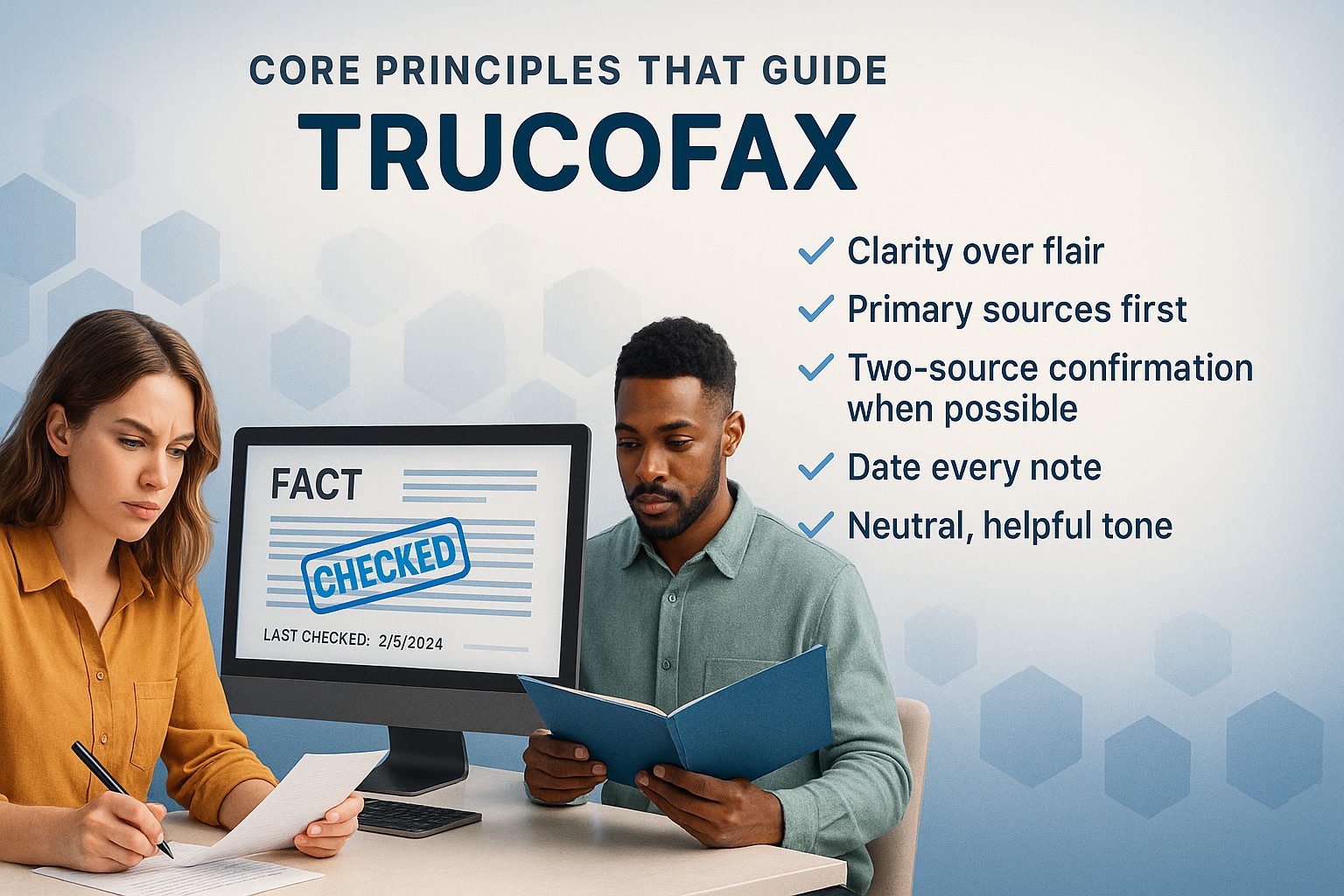
Dates matter more than many people think. A correct fact can turn false after an update. A number can change at the start of a new year. A policy can shift after a vote. Trucofax makes the “last checked” date part of the note. Readers see it at a glance. Editors know when to review it again.
Tone stays neutral. You explain, you do not sell. You avoid hype and vague phrases like “experts say” without names. And you add limits where needed and point out open questions. These small choices protect readers and build a durable reputation.
Principles in one quick view (useful snapshot #1):
- Clarity over flair
- Primary sources first
- Two-source confirmation when possible
- Date every note
- Neutral, helpful tone
Step-by-Step Method to Create a Trucofax Note
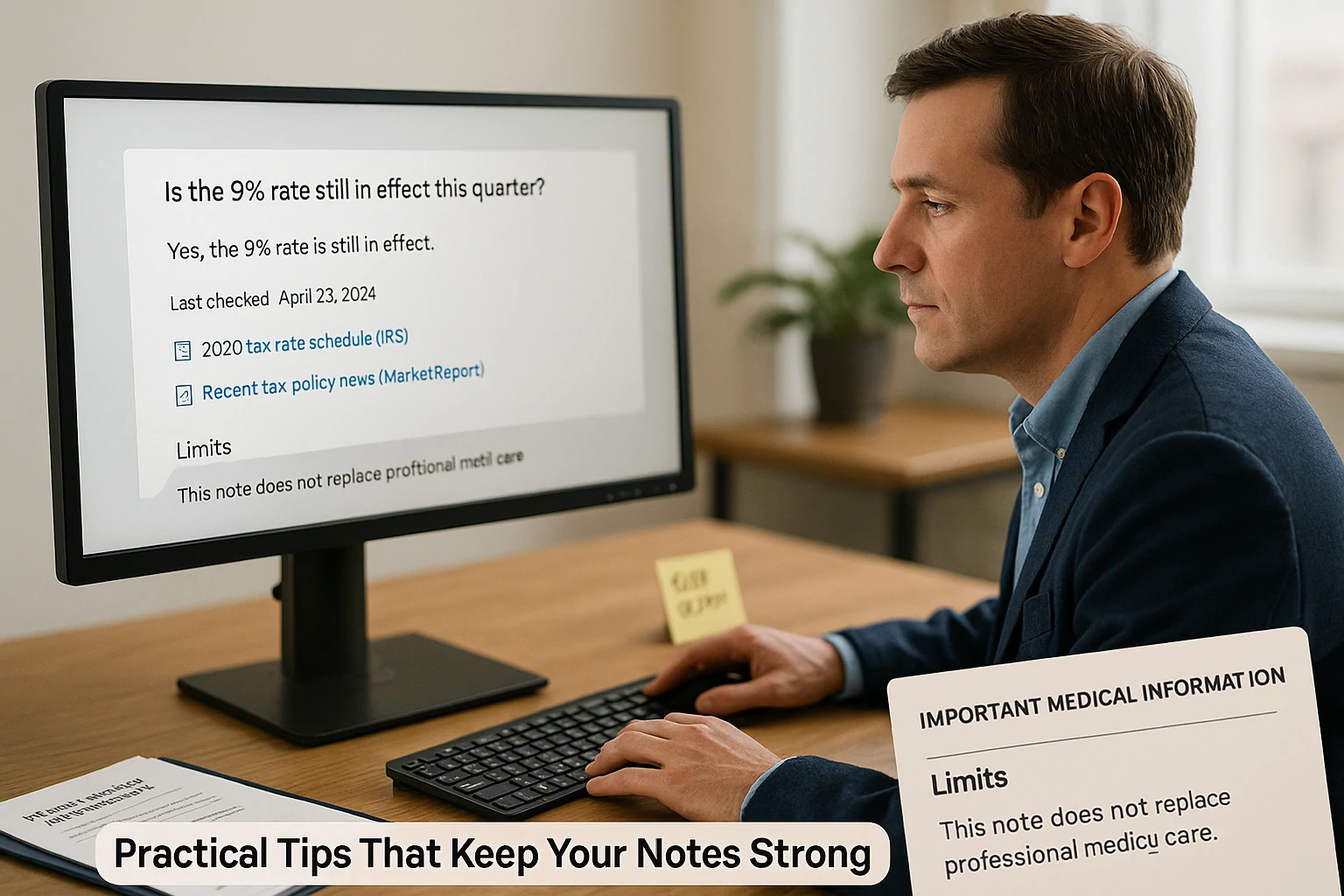
Start with a crisp question. Write it in one line. Is the 9% rate still in effect this quarter? A sharp question drives a sharp answer. Vague prompts lead to vague results, so you keep the claim tight.
Gather sources with care. Look for an official document, a direct policy page, and a respected outlet. Save the links and note the access dates. If a document is a PDF, record its title and section. If a news site cites a source, open that source yourself and confirm the exact part that matters.
Cross-check the parts that often drift. Dates, amounts, names, and section numbers tend to cause trouble. Match them across your sources. If you find a mismatch, search for a third source. If conflict remains, label the claim as partial or unclear. You keep readers safe by not pushing beyond proof.
Write the final note. Use a brief answer first, then the main support lines. Show the “last checked” date. List the source names in plain text. Keep the whole thing compact and readable. Publish the note on a page, in a card, or inside an FAQ block. Set a review reminder so the note stays alive.
Five simple steps (useful snapshot #2):
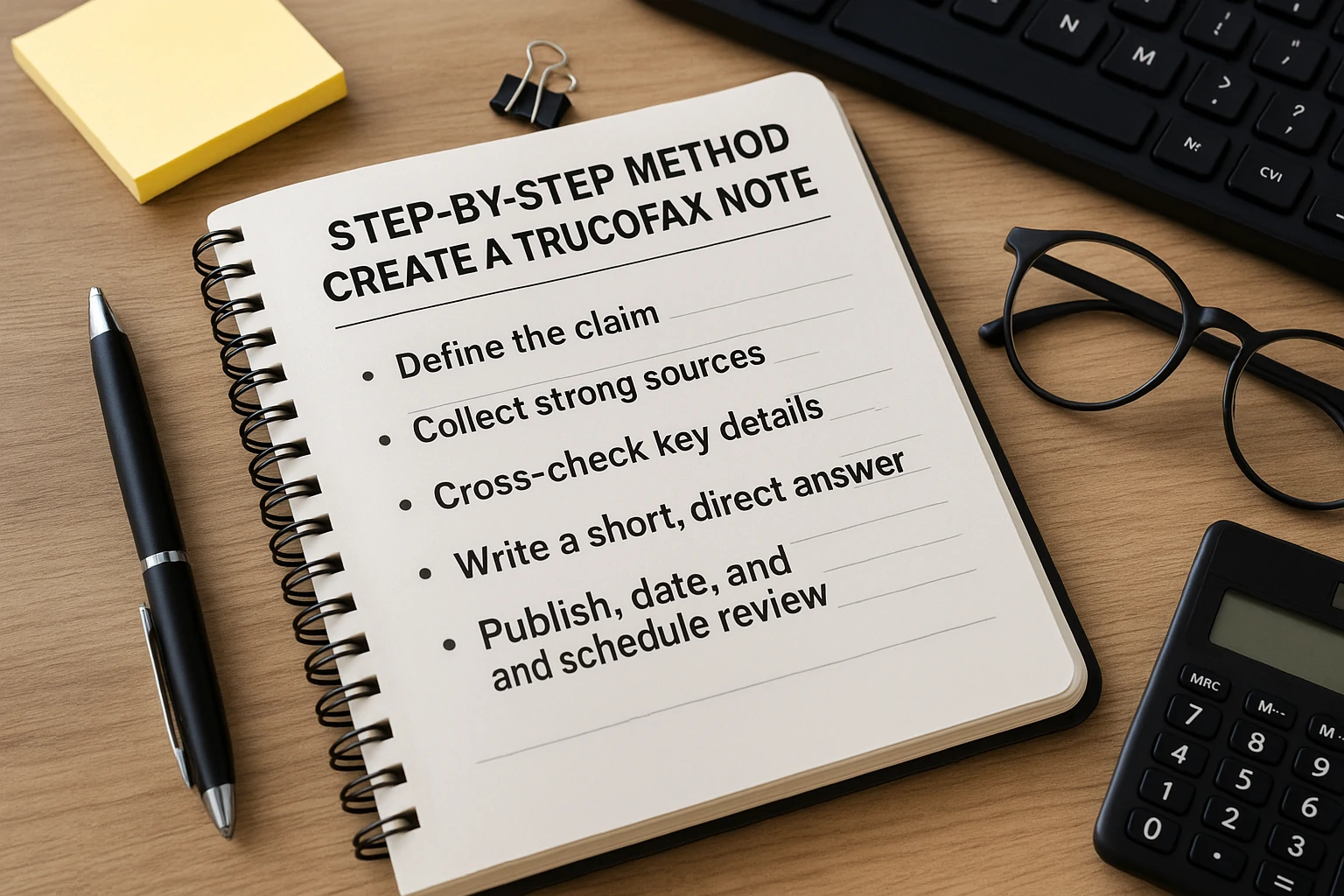
- Define the claim.
- Collect strong sources.
- Cross-check key details.
- Write a short, direct answer.
- Publish, date, and schedule review.
Examples That Show Trucofax in Daily Use
A news desk needs to clarify a transit fare change. The team finds the board vote record, the official fare table, and a city press release. Two sources match a start date, and the vote record names the motion. The note leads with the final date, lists two lines of proof, and shows the review plan. Commuters get a fast, correct answer.
A product page lists a laptop weight that conflicts with a vendor sheet. The editor opens the vendor PDF and the model page, then checks a third retail listing with a spec table. Two sources confirm a lower weight than the old copy. The note updates the page and adds a “last checked” tag. Shoppers see accurate data and fewer returns follow.
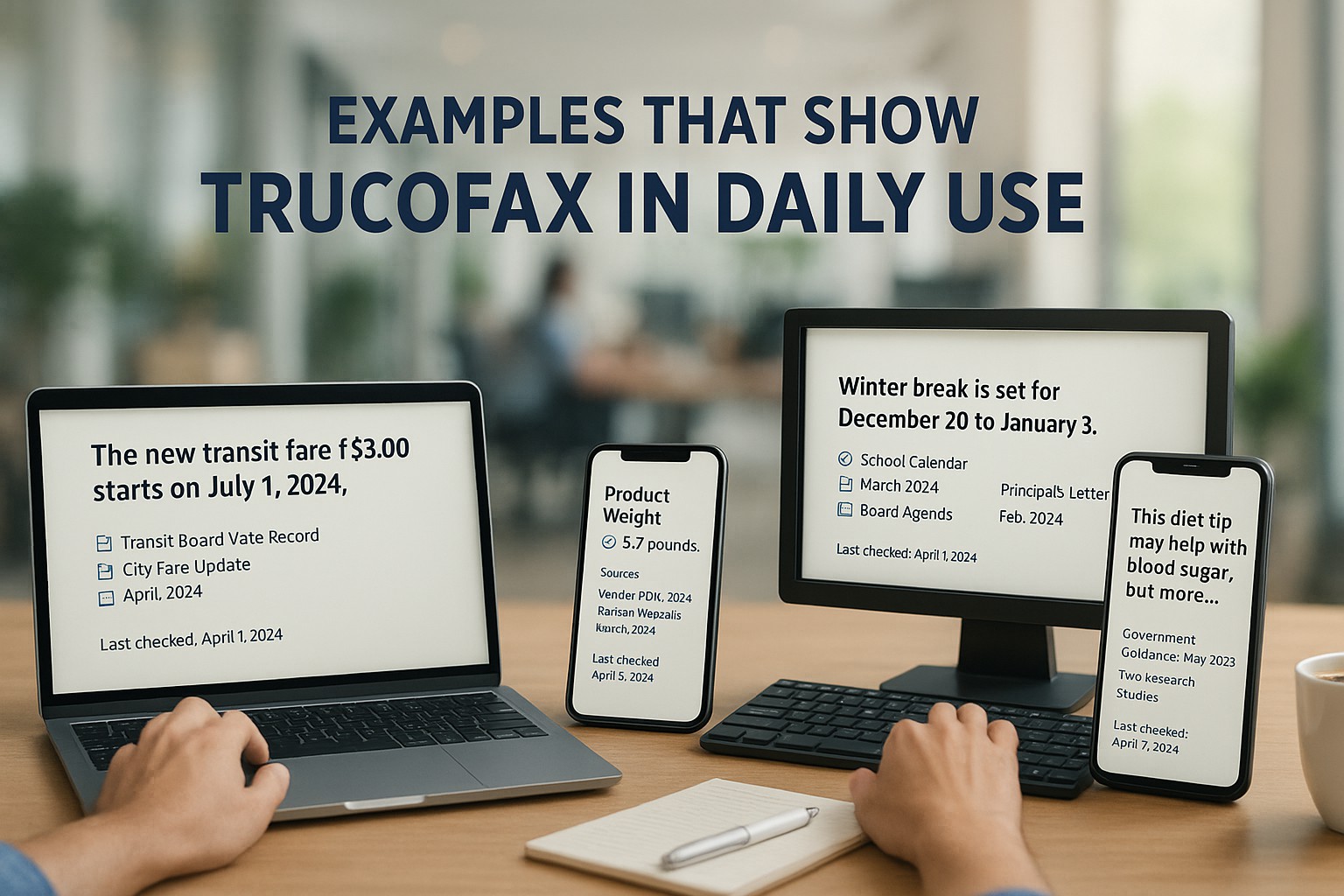
A school district plans a change to winter break. The site owner reviews the new calendar PDF, a principal letter, and a board agenda. The dates align across all three. The note updates the parent FAQ with the range and links the sources. Families plan travel with fewer surprises and fewer emails to the office.
A health blog covers a diet claim tied to blood sugar. The writer locates a government guidance page and two peer-reviewed abstracts. The claim proves too broad. The note narrows the message and adds a short limit line. Readers get value without unsafe advice.
Pros and Cons of a Trucofax Workflow
| Aspect | Pros | Cons |
|---|---|---|
| Accuracy | Fewer errors due to source checks | More time needed to confirm details |
| Trust | Clear dates and sources build confidence | Some readers expect bold claims and hype |
| Speed | Faster decisions once notes exist | Initial setup requires effort |
| Scale | Easy to teach and repeat | Needs steady reviews to stay fresh |
Three rows show the tradeoffs in plain view. The gains are real and compounding. The costs focus on time and patience. A small team can carry the load with a simple schedule and a shared checklist.
How to Set Up Trucofax in One Day
Pick one topic cluster that matters to your readers. Taxes, school dates, product specs, or travel rules all work. List ten high-value questions. Use site search logs, inbox threads, and social comments. Those places reveal what people ask most and where your answers will hit hardest.
Create a small source vault. A simple doc or spreadsheet does the job. Put each link on its own line with a short label. Add tags like “law,” “press release,” “PDF,” or “FAQ.” The labels help new contributors learn the landscape fast. The vault also prevents repeat work across your team.
Draft ten Trucofax notes with the same template. Lead with the answer. Add two to four lines of support. Include the “last checked” date. List the source names in plain text. Keep the tone neutral and the wording clean. Publish all ten notes on a hub page with a brief intro that states your policy.
Link those notes across your site. Add a small “Fact check” link near claims in longer guides. Insert selected notes into relevant FAQs. Share a short update via email if any note affects money, dates, or safety. Set a monthly review for fast-changing topics and a quarterly review for stable ones.
See More Blog: Türk İdla Meaning in 2026: What You Should Know Today
Quality Checklist and Common Errors to Avoid
Run each note through a short checklist. Confirm the claim is a question. Confirm the answer appears in the first sentence. And confirm the sources exist, are open, and support that exact answer. Confirm the date sits in a clear place. Confirm the tone stays neutral and free of hype. These checks take minutes and save hours later.
Errors tend to follow patterns. Old dates slip through after a new vote or policy change. Numbers appear with the wrong unit or decimal. A second-hand summary sneaks in where a primary doc exists. A link goes dead and leaves a gap. You guard against these misses with steady review and a small change log.
Edge cases appear when sources conflict. A region may adopt a policy at a different time from the state. A press release can omit a grace period found in the ordinance. A vendor sheet may list a weight without the power supply. A cautious note helps here. State what you know. Mark open parts as pending. Update once proof arrives.
Accessibility also matters. Readers skim on phones. Use headings that match real questions. Keep sentences short. Avoid jargon where a plain word exists. Add short labels to links, so screen readers work well. These steps reach more users and reduce support requests.
Trucofax and Search: Fit with AI Overviews and PAA
Search systems reward helpful pages that answer real questions. Trucofax produces that shape by default. Each note targets a clear intent. Each section carries a short, direct answer. The layout supports scans on small screens. The structure maps to People Also Ask in a natural way.
Freshness plays a large role in visibility. A visible “last checked” date shows care. A page that updates on a schedule gains signals that last. Source links to official pages help systems judge quality. Neutral tone reduces the risk of thin or spammy wording. Clean phrasing lowers bounce and raises time on page.
AI Overviews extract concise answers. Trucofax notes present a clean answer first, followed by proof. This order helps systems lift the key line and still see the support. The result is more useful summaries and a higher chance that users click through for details.
Internal linking spreads value. A hub page of notes links out to related guides. Guides link back to the notes that confirm their key claims. Users move smoothly between short facts and longer context. The network improves trust and keeps readers on your site.
Practical Tips That Keep Your Notes Strong
Set a single owner for final approval. Many people can draft notes, yet one person should sign off before publishing. That person checks tone, dates, and sources. A clear owner makes the system tight and fair.
Prefer direct links to the exact section, not just the homepage. A city code page with Section 2 beats a generic city portal. A vendor model page beats a brand landing page. A guidance PDF with page numbers beats a long site with vague navigation. Readers feel safe when they can quickly.
Add a short limits line where risk exists. Health topics, money topics, and safety topics deserve extra care. Write one calm sentence that explains what the note does not cover. Suggest a path to a licensed expert when needed. This clarity protects readers and protects your brand.
Use small, planned bursts of review. A calendar invite keeps the habit alive. A ten-minute sweep can catch broken links or small changes. High-risk topics deserve closer watch. Stable facts can rest longer. Balance the schedule with the impact of each note.
Two Quick Snapshots That Save Time
- Source types that carry the most weight: law text, agency pages, signed statements, and peer-reviewed papers.
- Red flags that need more proof: anonymous claims, old screenshots, second-hand summaries without links.
Use these snapshots as light guards at the edge of your workflow. They prevent many errors before they appear.
Conclusion
Trucofax turns careful fact work into a simple daily habit. You start with a sharp question, locate strong sources, and cross-check the parts that fail most often. You write a short answer, add the “last checked” date, and keep a neat source trail.
Readers see honesty and care. Teams ship faster with fewer debates. Search systems pick up the clear intent, the fresh timestamps, and the credible links. You do not need complex tools to apply this method.
You need a steady process, a neutral voice, and a plan to review what matters most. Start with ten notes, publish a hub, and build from there. Trust grows one clean answer at a time.
Read More Blog Posts:
