
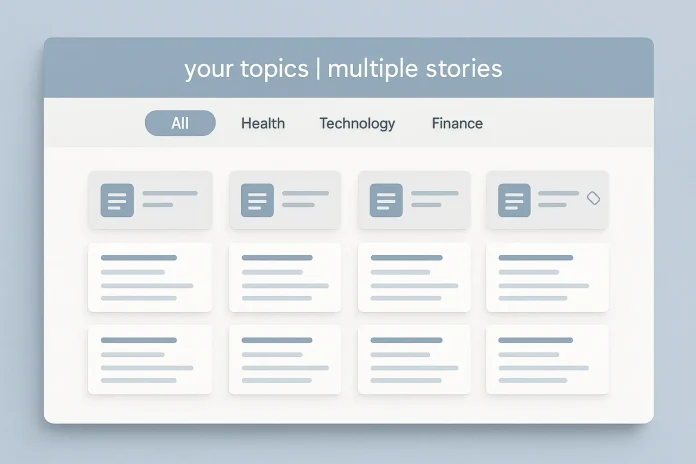
Your topics | multiple stories means content that matches your chosen interests and gives you many articles, blogs, or news pieces under one feed. It helps readers find what matters to them and stay updated without searching again and again.
The internet now gives more content than any one person can read. News websites, blogs, video platforms, and social media flood users with updates every second. Many people feel lost or tired when they try to find the right content. But one smart feature solves this issue: your topics | multiple stories.
Choose Your Favorite Topics
This setup lets you choose your favorite topics. Then it shows you different stories or posts related to those interests. You no longer need to search every day. You get updates based on what you like. This makes your time online easier and more useful.
Many platforms already use this system. Google News, YouTube, and Medium offer custom feeds like this. They give stories based on your past clicks, chosen topics, or saved settings. This article will show what the keyword your topics | multiple stories really means, how it works, and how it helps both readers and creators.
You will also learn how to use it on your site, what tools can help, and what tips make the feed better. The idea is to make your reading smoother and your content reach the right people faster.
What Does “Your Topics | Multiple Stories” Mean?
This keyword joins two ideas:
- Your topics: the interests or subjects you select.
- Multiple stories: a set of articles or updates under each topic.
When combined, it means a personalized content stream. Readers get more than one story linked to each chosen topic. The system updates itself often and keeps content fresh and on-topic.
Example:
If you pick “Health” and “Technology” as your topics, your feed will show news, blogs, and updates from both. Each topic gives multiple stories that match it.
Some online content platforms also use topic-based feeds to help users see updates faster, just like the model you find on online content platforms.
It’s Not Just a News Feature
Many users think this only applies to Google News or YouTube. That is not true. This model works across blogs, business websites, and content tools. You can use it in any setup that groups stories under tags or topics.
Not Just a Visual Feed
Some believe this is only about looks. But it also affects how search engines rank your site. Topic-focused layouts help Google understand your content.
Not Limited to Big Platforms
People assume only large sites can use it. Even small blogs or niche sites can create smart feeds. You just need topic pages and internal links.
Benefits of Using “Your Topics | Multiple Stories”
This keyword structure offers many real benefits. Here are some of the top ones:
For Readers:
- Saves time by showing only useful stories.
- Helps find content faster.
- Feels more personal and less random.
- Reduces unwanted news or distractions.
For Creators:
- Brings content to the right audience.
- Increases views and engagement.
- Supports SEO with better tags and topic structure.
- Makes content part of smart feeds on Google or platforms.
How It Works on Big Platforms
Many large websites now follow this model. They let users follow topics and see matching stories. Some popular free streaming sites also use simple topic groups that place fresh posts under clear categories, which makes the feed easier to follow.
Here are some popular examples:
Google News
You can pick topics like Space, Health, or Politics. Google shows new stories under each topic. It updates the feed every hour.
YouTube
It tracks your watch history and shows new videos under your favorite categories. The homepage becomes a personal feed.
Medium
Medium lets readers follow topics like Design, Marketing, or AI. Each time you visit, it shows fresh stories for those topics.
Steps to Use “Your Topics | Multiple Stories” on Your Site
You can also apply this idea to your blog or content platform. Here are simple steps:
Step 1: Add Topic Tags
Use clear, short tags for every post. Examples include Fitness, Finance, or Parenting.
Step 2: Link Tags to Topic Pages
Make a page for each topic. Show all related posts under that page.
Step 3: Group Stories Together
Show 3–5 related posts below each main article. Label them under the same topic.
Step 4: Use Schema Markup
Add JSON-LD or microdata to show topic and related stories. This helps Google index your content better.
Step 5: Create a Your Topics Dashboard
If possible, let users choose their interests. Show a feed of multiple stories under each.
How to Make Your Topics Look Better
Use Cards and Grids
Instead of a plain list, show each story in a card. Add a photo, title, and short line. Use a clean grid layout to show 3 or 4 stories per row.
Add Scroll or Tabs
If your design supports it, use tabs or horizontal scrolls. This keeps the layout tight and mobile-friendly.
Show Trending Topics
Show top 3 trending tags or topics on your homepage. Users click what they like and see multiple stories inside.
Tips to Improve User Experience
Good design and content flow help users stay longer. Try these simple tips:
- Use bold topic headers for each section.
- Show time of last update.
- Add short summaries under each story title.
- Use “Read more” links to avoid long pages.
- Keep the page fast and mobile-friendly.
Real Example of Your Topics | Multiple Stories in Action
Imagine This Case
Sara runs a cooking blog. She tags her recipes under Quick Meals, Low Sugar, and Kids Lunch. Each tag links to a page that shows multiple stories under that topic.
Readers who like “Kids Lunch” see 10 related ideas at once. This model keeps them reading and builds trust in her site.
Pros and Cons
This model is easy to scale and great for SEO. Readers spend more time on each page, which lowers bounce rate and increases trust. However, the setup must stay fresh. Outdated topic pages or wrong tags can confuse users.
Use Cases Across Different Industries
News Sites
Show the latest headlines per topic like World, Sports, or Business.
Health Blogs
Group stories under Wellness, Fitness, Diet, or Mental Health.
eCommerce Blogs
Use categories like Fashion, Electronics, or Home Decor with related tips or reviews.
Education Platforms
List topics like Math, Science, or Test Prep with multiple lesson articles.
Who Should Use This Content Model
Bloggers and Writers
Writers who post often can group related content to boost traffic. This keeps readers on the site longer and shows authority in each topic.
Niche Site Owners
Sites about finance, health, parenting, or travel can build trust using this setup. Readers can follow what matters most.
Product or SaaS Companies
You can organize support articles, updates, or features into topics. Users can explore updates without confusion.
Why This Model Works Well in 2025
AI, content overload, and short attention spans make this model ideal. Readers do not want to search through 100s of links. They want smart, clean feeds that match their needs.
Also, Google AI Overviews now favor content that answers real user needs. Grouped topics and multi-story feeds do exactly that. Your site becomes more helpful, which boosts rank.
The Future of Content Feeds in 2026
Feeds Will Go Deeper
Feeds won’t just show fresh posts. They will track user clicks, likes, and shares to adjust what stories appear next.
Users Will Choose More Filters
Websites may let users pick filters like only 2 min reads or only expert content. The more control you give, the longer they stay.
AI Will Sort Topics
AI will start to auto-label stories and group them. This saves time and keeps the feed sharp.
SEO Benefits of “Your Topics | Multiple Stories”
This structure supports SEO in many ways:
- Better internal linking
- Improved user experience
- Lower bounce rate
- Higher session time
- Topic authority grows over time
Conclusion
Your topics | multiple stories is more than a tag or a feature. It’s a smarter way to present and read content. Users save time. Writers reach the right people. Platforms gain trust.
If you run a blog or site, start using this method. Group your stories. Let readers choose topics. Keep feeds fresh. This setup will not just improve your traffic but also make your content more useful and future-proof.
Frequently Asked Questions
Q: What does your topics | multiple stories mean?
A: It means showing users more than one story under each topic they select or follow. It helps create a custom reading feed.
Q: How can I use this on my blog?
A: Use tags for each post, create topic pages, and show 3–5 related stories under each topic. Add schema markup if possible.
Q: Does Google support this type of structure?
A: Yes, Google rewards well-organized content and topic-focused pages, especially with schema and clear linking.
Q: What are the benefits of this keyword model?
A: Readers get quick access to what they want. Site owners get better engagement and SEO results.
Q: Can small websites also use this setup?
A: Yes, even a personal blog can create topic pages and group articles under each one.
Q: Is this good for user experience?
A: Yes, it makes reading easy and personal. Users stay longer and come back more often.
