
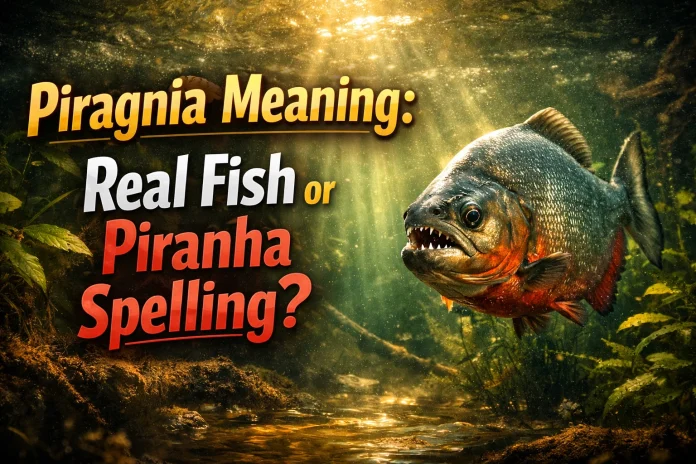
What Does Piragnia Mean?
The simplest piragnia definition is this. People use “piragnia” as a name for piranha-like fish. In many cases, it is not a separate animal at all. It is just a trend word that grew through online searches, typing errors, and repeated posts. That is why piragnia spelling keeps showing up in blogs and comments.
In other words, piragnia meaning often equals “piranha” in casual writing. It is common in places where English is not the first language. It also appears when people write fast and do not check spelling. So when someone asks is piragnia real, the most accurate answer is this. The word exists online, but the fish is usually a normal piranha.
Is Piragnia a Real Fish or Just a Misspelling?
Many people ask, is piragnia real as a unique species. In science, the answer is no. There is no official fish listed as “Piragnia” in major biological records. There is no accepted taxonomy for it. You will not find it as a proper genus and species name. It does not appear as a separate scientific classification.
Most evidence points to something simpler. Piragnia misspelling of piranha is the best explanation. It is like how people type “alot” instead of “a lot.” The internet repeats the wrong form until it feels normal. That is why piragnia fish became a searchable phrase. It grew from repetition, not research.
Is Piragnia A Scientific Name?
No, it is not. A real scientific name follows a strict rule and uses Latin form. It also gets published and verified. Piragnia has no such record. That makes it a keyword, not a biological label. Still, people keep using it because it sounds exotic and mysterious. It feels like a hidden monster from the jungle.
A smart way to think about it is this analogy. Imagine someone calls a tiger a “tigher” online. If enough people copy it, the wrong word starts to look real. That is exactly what happened here. Piragnia misspelling of piranha turned into a trend term through copying, reposting, and careless typing.
Piragnia vs Piranha: What Is the Difference?
When readers compare piragnia vs piranha, they often expect a big surprise. They imagine two different fish with different behavior. In reality, there is no real biological split. Piragnia piranha difference exists mainly in spelling and online usage. The fish itself is still a piranha in most cases.
The confusion grows because piranhas already have a strong image. People know them as a sharp teeth fish with scary jaws. Movies show them as wild killers. That makes people believe any new word must mean a new threat. So piragnia vs piranha becomes a myth-based comparison, not a science-based one.
Here is a simple comparison table you can use to explain it clearly:
| Term | What People Think It Means | What It Usually Means |
|---|---|---|
| Piragnia | A new Amazon predator | A misspelling or slang for piranha |
| Piranha | A dangerous flesh-eater | A group of river fish with mixed diets |
This table helps explain why many questions online sound dramatic. The truth is calmer. The word changes. The animal usually does not.
Where Did the Word Piragnia Come From?
A big part of this topic is language. Many fish names come from local tribal words. The word “piranha” itself links to South American languages. Some sources connect it to Tupi language ideas like “fish” and “tooth.” Over time, people changed pronunciation in different regions. That made the word drift.
Now add the internet factor. One person types “piragnia.” A thousand others copy it. Blogs pick it up. Forums repeat it. That is how piragnia spelling became common. People love strange words. They sound rare and exciting. The name also looks like a “secret” type of fish.
Pop culture poured fuel on the fire. Video games, horror films, and jungle stories often remix names. Writers sometimes tweak spelling to avoid copying. That leads to more versions online. In short, the word “piragnia” is a product of language drift plus internet copying.
What Type of Fish Is Piragnia? (Family and Classification)
Since piragnia fish usually refers to a piranha, we should explain what that fish really is. Piranhas belong to the piranha family Serrasalmidae. This fish family includes both aggressive meat-eaters and calm plant-eaters. This surprises many readers. Not every fish in the group is a villain.
A famous type is the red-bellied piranha. People often use it as the “default piranha” in photos and documentaries. But there are many piranha species. Some focus more on small fish. Some eat insects. And some eat plants. That is why “piranha” is a group term, not a single creature.
The most important fact is this. “Piragnia” is not a separate family. It is not a separate branch of evolution. It sits under the same umbrella as piranhas, at least in common usage. So the classification stays the same.
Where Do Piragnia Fish Live? (Habitat and Distribution)
If we talk about piragnia freshwater fish, we are mostly talking about South America. These fish live in warm rivers with rich life. The best known region is the Amazon Basin. Many also live in the Orinoco Basin. That includes streams, lakes, and connected river networks.
This habitat matters because it shapes behavior. Piranhas prefer slow-moving water with plenty of cover. They like submerged vegetation and shadowed zones. They also use muddy backwaters as safe shelter. These places help them hide, breed, and hunt with less risk.
In rainy months, water rises and floods large areas. This creates flooded forests and wide floodplains. That period triggers rainy season migration. Fish move into new areas for food and breeding. These Amazon rainforest rivers become a living highway. Everything shifts. Food becomes easier to find.
Here is a fact table that helps USA readers picture the setting:
| Habitat Feature | Why It Matters |
|---|---|
| oxygen-rich water | Supports active fish and strong feeding |
| flooded forests | Creates new food zones during rain |
| muddy backwaters | Gives protection and breeding cover |
| submerged vegetation | Offers shelter from predators |
Piragnia Physical Features (Teeth, Size, and Appearance)
The look of this fish drives most fear. People see teeth and imagine danger. A piranha has triangular teeth that lock together. This design works like a pair of scissors. That is why it becomes a famous sharp teeth fish around the world.
Most piranhas are not huge. Many stay within 6 to 12 inches long. Still, their teeth look oversized. Their bite is not random either. Their body supports powerful jaw muscles. This creates the famous piranha bite force. Scientists often study this because the bite strength is high compared to body size.
A simple example helps. Think of a small pair of bolt cutters. It is compact, but it can slice metal wire. That is similar to piranha teeth. It is not about size alone. It is about design, grip, and cutting speed.
What Do Piragnia Eat? (Diet and Feeding Habits)
Most people think piranhas only eat meat. That is not true. Many are omnivorous fish, which means they eat both animal food and plant food. They eat small fish, but they also eat plant matter, river seeds, and fallen fruit.
Their diet often includes aquatic insects, small snails, and crustaceans. They also eat seeds and fruits during flood season. When food gets scarce, they may turn to scavenging. That means they consume dead fish or leftovers. This helps nature stay clean. It supports their river cleanup role in the environment.
The famous “frenzy” idea is real sometimes, but not normal. The piranha feeding frenzy myth grew from staged feeding videos and stressful conditions. In nature, piranhas often feed in short bursts. They bite, retreat, and regroup. They do not always swarm like a horror movie scene.
Piragnia Behavior and Social Life
Piranhas often live in groups. This is called schooling behavior. Young fish do it more. That is known as juvenile schooling. It helps them survive. A large group confuses predators. It also improves feeding success.
Aggression usually has triggers. One trigger is territorial defense. Another is the breeding season. Another is hunger during drought. Stress can shift behavior fast. In harsh conditions, fish become defensive. That is called defensive behavior. These reactions come from environmental stressors like heat, low food, or low oxygen levels.
Some studies suggest they also learn. That includes pattern recognition and social learning. In simple words, they remember danger and food patterns. This makes them smarter than many people expect. They are not mindless machines. They are survival experts.
Myths, Human Safety, and Pet Laws
The biggest myth says piranhas eat people in seconds. That is a classic story. It sells movies. It creates clicks. And it also fuels aggressive fish myths. In reality, piranha attacks on humans are rare and usually not deadly. Most bites happen when humans provoke fish or enter breeding areas.
In drought season, water shrinks. Fish crowd into small pools. Food becomes limited. This can increase bites. Still, it is not “hunting humans.” It is stress behavior. Think of it like stepping into a beehive zone. The bees did not plan an attack. You just walked into the wrong place.
Now the USA angle matters a lot. Many states restrict or ban piranhas as pets. The reason is simple. Released fish can become invasive. This hurts native life. If you ever see “piragnia fish for sale,” you should check local law first. A good safety rule is this: never release aquarium fish into lakes or rivers. That single act can create long-term damage.
Here is a quick myth vs fact table you can add:
| Myth | Real Fact |
|---|---|
| Piranhas always attack humans | Most avoid humans and flee |
| They only eat meat | Many eat fruit, seeds, and insects |
| A bite always kills | Most bites are small and defensive |
Final Thoughts
Now you know the real story behind piragnia. The word feels mysterious, but the truth is clear. It is usually a spelling variation that points to the famous piranha. The fish itself is part of a complex river world, not a horror villain. If you respect nature, you stay safe.
If you ever wondered what is piragnia is, remember this simple line. It is usually a piranha name mistake that became popular online. And yes, that happens more often than you think.
FAQs About Piragnia
Are piranhas aggressive to humans?
Not usually. Most piranhas avoid humans and bite only when stressed or threatened.
Can you eat piranhas fish?
Yes. People eat piranha in South America, and it is safe when cooked well.
Do piranhas exist today?
Yes. Piranhas still live in South American rivers like the Amazon and Orinoco.
What are 5 facts about piranhas?
They live in freshwater rivers, have sharp teeth, often swim in groups, eat both plants and animals, and rarely attack humans.
How many people were killed by piranhas?
There is no reliable number. Deaths are extremely rare and not well confirmed.
Can piranhas strip a body in minutes?
In real nature, this is very uncommon. Movies exaggerate this idea a lot.
Read More: Red Setter Irish: Complete Guide to Ireland’s Elegant Sporting Dog
