
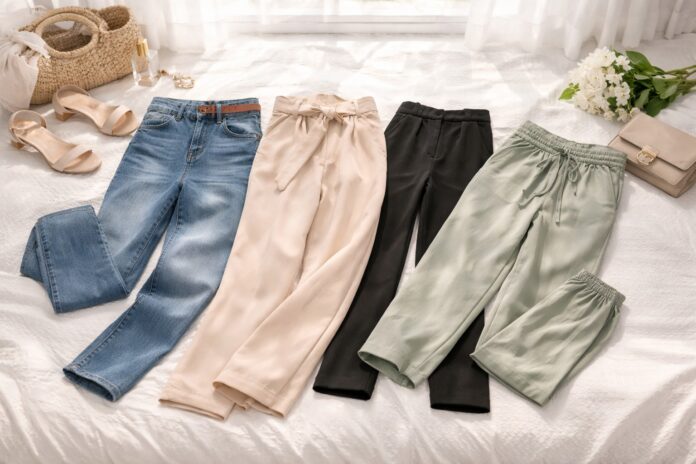
Finding pants that fit well and flatter can be a challenge, especially considering the diversity in body types. A survey by INeedAPairToo revealed that 64% of women struggle to find pants that fit properly, which can affect confidence and comfort. But with the right knowledge and strategies, this fashion quest can turn into a successful endeavor.
Understanding different body shapes and how various pants styles interact with them is a game changer. In this article, you’ll discover how to identify pants that accentuate your natural silhouette, learn about key measurements for a perfect fit, explore the most flattering fabrics and cuts, and gain smart shopping strategies to find your ideal trousers.
Understanding Body Shapes and Pants Styles
The first step to finding your perfect pair of pants is recognizing your body shape. Whether you have an hourglass figure, pear shape, apple shape, athletic build, or a rectangle silhouette, each body type has styles that naturally complement it. For instance, high-waisted pants might highlight an hourglass figure while straight-leg pants can balance a pear shape. To discover a wide selection of flattering pants for all body types, it’s essential to understand these subtleties.
Each style brings a distinct set of lines and contours that can enhance or detract from your natural body shape. An apple-shaped individual might opt for pants with a slight flare to balance broader shoulders, whereas someone with a more athletic build could choose a tapered leg to showcase toned legs. Understanding these subtleties is key to choosing pants that flatter.
Actionable guidance entails trying on a variety of styles and observing how they interact with your body. Online fitting rooms and styling services offer visual aids to help visualize the potential fit. Pay attention to where pants cinch, drape, or follow the line of your body to gauge their compatibility with your specific shape.
Key Measurements for the Perfect Pants Fit
To ensure you select pants that fit flawlessly, you must understand the essential measurements that matter: waist, hips, inseam, and rise. Mismatched measurements can lead to unsatisfactory fittings like gaping at the waist or unflattering bunching.
Get familiar with measuring techniques or visit a tailor to take accurate measurements of your body. This is especially important for online shopping where you can’t try before you buy. Knowing your exact measurements reduces the instances of returns and exchanges, saving you time and hassle.
Take action by keeping your measurements handy when shopping, and compare them to the sizing charts provided. Don’t forget that different brands and styles may vary, so it’s wise to check each time you shop. If you’re in-between sizes, consider buying the larger size and having the pants tailored for a custom fit.
Fabrics and Cuts That Flatter Different Figures
Fabrics play an enormous role in how pants lay and move on your body. Stretch fabrics can provide comfort and forgiveness, while structured fabrics offer a more tailored look. Additionally, the right cut can enhance your best features and downplay areas you’re less fond of.
It’s useful to note that thin, stretchy materials, like jersey, may cling and highlight every curve or imperfection. Heavier, woven fabrics often provide more structure and can smooth out your silhouette. Persons with curvier figures might favor bootcut or wide-leg trousers that balance their proportions, while individuals with less curves might opt for skinny or slim-fit pants to create the illusion of shape.
For actionable guidance, experiment with different fabric weights and stretches. Check the composition labels when shopping, and remember that natural fibers like cotton or wool typically offer breathability and durability. A specific guide on how different fabrics complement body types can be a valuable reference when selecting your next pair of pants.
Shopping Strategies for Finding Your Ideal Trousers
Shop with a strategy in mind. Start by identifying stores and brands that cater to your body type – some specialize in petite, tall, plus-size, or athletic cuts. Look for retailers with flexible return policies to reduce risk when trying new styles or fits.
Another key strategy is to follow fashion influencers or bloggers who share your body shape and take note of the brands and styles they wear. They often provide real-life fit reviews and styling tips that can aid in your selection. Also, shopping during sales or using discounts can make tailoring a more accessible option for perfecting the fit of your pants.
Lastly, don’t underestimate the power of a good tailor. Investing in alterations can transform an average pair of pants into a wardrobe staple. Take action by finding a reputable tailor in your area and having them adjust your pants for the ideal fit. Remember that sometimes the best fit comes not off the rack, but from a little personalized tweaking.
Ultimately, the quest for flattering pants is not just about following trends or sizes on a label. It’s about embracing your unique body shape and celebrating it with clothing that fits and flatters. With a mix of know-how and smart shopping techniques, you can find trousers that not only look great but also make you feel confident and comfortable every time you wear them.

